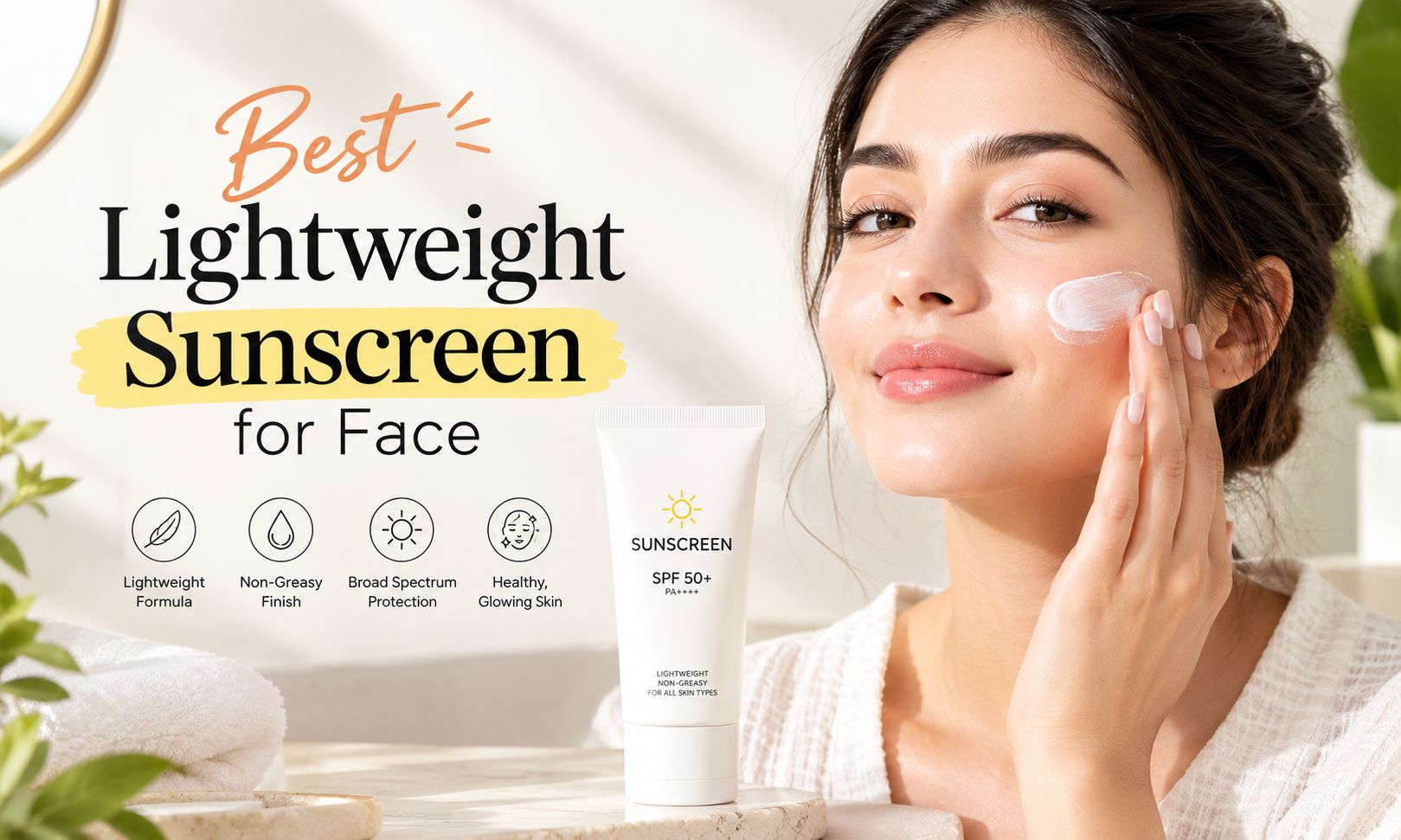
Quick answer: The best lightweight sunscreen for your face is a broad-spectrum SPF 30 or higher formula that feels thin, absorbs quickly, and does not leave a greasy or white finish. The American Academy of Dermatology also recommends water resistance, applying about 15 minutes before going outside, and reapplying every two hours.
Key takeaways
- Check the label for three things: broad spectrum, SPF 30 or higher, and water resistant.
- Fluids, gel-creams, and light lotions feel the least heavy on the face.
- The best sunscreen is the one you will wear every day, so texture matters.
- Apply it generously, and reapply during long spells outdoors.
- Sunscreen is one part of sun protection. Shade, clothing, and sunglasses help too.
Most people who skip sunscreen on their face do not skip it because they doubt it works. They skip it because it feels greasy, leaves a grey cast, stings the eyes, or ruins their makeup. That is a fair complaint, and it used to be a bigger one. Modern facial sunscreens come in thin fluids, silky gels, and sheer lotions that sit comfortably under makeup. This guide explains how to read the label, choose a texture, and which lightweight options are worth a look.
What does “lightweight” sunscreen actually mean?
No one has regulated the term, so “lightweight” mainly describes how a product feels and looks on the skin. In practice it usually means one of these textures:
- Fluid or milk: thin, runny and quick to absorb.
- Gel or gel-cream: cooling and watery, often with a sheer finish.
- Serum-style: very light, usually in a dropper or pump.
- Light lotion: thicker than a fluid but not creamy or sticky.
A lightweight texture does not mean weaker protection. The protection comes from the UV filters and the SPF and UVA rating, not the feel.
What should you look for on the label?
The American Academy of Dermatology (AAD) recommends choosing a sunscreen that is broad spectrum, SPF 30 or higher and water resistant, as laid out in its guidance on choosing sunscreen.
Broad spectrum
This means the product protects against both UVB rays, which cause sunburn, and UVA rays, which contribute to skin ageing and also raise skin cancer risk. In the UK, the NHS recommends looking for an SPF of at least 30 and a UVA star rating of at least four stars, as explained in its sunscreen and sun safety guide.
SPF 30 or higher
SPF measures how well a product protects against UVB. According to the AAD, an SPF 30 sunscreen blocks about 97 percent of UVB rays. Higher numbers add only a small amount of protection, so you do not need to chase SPF 100.
Water resistant
No sunscreen is waterproof or sweatproof. Labels that say water resistant for 40 or 80 minutes tell you how long the protection lasts in water before reapplication.
Mineral, chemical or hybrid
- Mineral sunscreens use zinc oxide or titanium dioxide, which sit on the skin and reflect and scatter UV. They are often gentler on sensitive skin but can leave a white cast on deeper skin tones, depending on the formula.
- Chemical sunscreens use organic filters that absorb UV. They tend to feel lighter and rub in more clearly.
- Hybrid sunscreens combine both.
Neither type is better for everyone. The best choice is the one that suits your skin and that you will use.
Which sunscreen suits which skin type?
- Oily or acne-prone skin: a gel or fluid labelled non-comedogenic or oil-free.
- Dry skin: a cream or lotion with hydrating ingredients. The AAD notes that creams and lotions are best for dry skin and the face.
- Sensitive skin: a fragrance-free mineral or hybrid formula, patch tested first.
- Deeper skin tones: a tinted mineral formula or a clear chemical fluid to avoid a white cast.
- Wearing makeup: a thin formula that sets quickly and does not pill.
How were these sunscreens chosen?
The list below is based on manufacturer descriptions, widely stated product details, and features that suit daily face use. It is not based on hands-on testing by our team. SPF, UVA protection, and ingredients differ between countries, so read the packaging on the product you actually buy.
What are the best lightweight sunscreens for the face?
La Roche-Posay Anthelios UVMune 400 Invisible Fluid: best for a thin, invisible finish
This is a fluid sunscreen known for a lightweight, sheer feel and strong UVA protection, using a UV filter the brand calls Mexoryl 400. It suits readers who want a thin texture for daily wear. Check the exact SPF in your market.
EltaMD UV Clear Broad-Spectrum SPF 46: best for oily or acne-prone skin
A widely recommended facial sunscreen with a lightweight lotion texture, it includes niacinamide and is often chosen by people with breakout-prone or sensitive skin. It uses a mix of mineral and chemical filters.
Supergoop Unseen Sunscreen SPF 40: best under makeup
Supergoop describes this as a clear, oil-free sunscreen that feels weightless and acts a little like a primer. It suits readers who dislike sunscreen texture and want something that sits well under foundation.
Altruist Dermatologist Sunscreen: best affordable UK option
Designed by a dermatologist, this affordable sunscreen is a popular choice for readers in the UK. It is available in SPF 30 and SPF 50 versions and has a light, easy-to-spread texture. Check the current formula and SPF on the packaging.
Neutrogena Hydro Boost Water Gel Sunscreen: best gel texture
Neutrogena’s water gel is a cooling, watery sunscreen based on a hydrating formula. It is a convenient option from the pharmacy shelf, though ranges and SPFs vary by country, so check what is sold near you.
Black Girl Sunscreen: best for avoiding a white cast
Created with deeper skin tones in mind, this range is designed to blend in without a chalky look. It is a sensible option for people who find many mineral formulas leave a grey or purple tint.
Quick comparison
| Sunscreen | Texture | Filter type | Good for |
| La Roche-Posay Anthelios UVMune 400 Invisible Fluid | Fluid | Chemical | Thin daily wear |
| EltaMD UV Clear | Light lotion | Mineral and chemical | Oily or sensitive skin |
| Supergoop Unseen | Clear gel-cream | Chemical | Under makeup |
| Altruist Dermatologist Sunscreen | Light lotion | Chemical | Budget, UK shoppers |
| Neutrogena Hydro Boost Water Gel | Gel | Chemical | Cooling feel |
| Black Girl Sunscreen | Lotion | Chemical | Avoiding a white cast |
Which sunscreen suits which situation?
Your daily routine might need a different sunscreen from your holiday routine.
- Office days and school runs: a thin fluid or gel-cream that you can apply in the morning and forget. Comfort matters more than a high water-resistance rating.
- Exercise and outdoor sport: a water-resistant formula that will not run into your eyes. A stick is useful around the eyes, as the AAD notes.
- Holidays and beach days: a water-resistant, broad-spectrum formula with a higher SPF, applied generously and reapplied after swimming or towelling off.
- Cold, bright days: sun and snow glare can still affect your skin, so wear sunscreen even in winter if you spend long periods outdoors.
- Travelling by air or driving: UV can pass through windows, so protect your face on long journeys.
- Reactive or eczema-prone skin: choose fragrance-free formulas and patch test first. Our guide to the best moisturizer for sensitive skin explains how.
If a particular sunscreen stings your eyes, try a stick around the eye area or a mineral formula, and keep the product away from the lash line.
How much sunscreen should you use on your face?
Most people apply far too little. The AAD says most adults need about one ounce of sunscreen, enough to fill a shot glass, to cover the body. For the face alone, a commonly quoted rule of thumb is around a quarter of a teaspoon, though this is a guide rather than an official measurement. If in doubt, use a generous layer, and do not forget your ears, neck, and the sides of your face.
A few more tips from AAD guidance:
- Apply about 15 minutes before going outdoors.
- Apply to dry skin.
- Reapply about every two hours, and after swimming or sweating.
- Choose creams or lotions for the face, and a stick for the area around the eyes.
How do you wear sunscreen under makeup?
Order matters. A reliable routine looks like this:
- Cleanse and moisturise. Let your moisturiser absorb for a few minutes. If you need a gentle option, see our guide to the best moisturizer for sensitive skin.
- Apply sunscreen. Use enough, pat it in, and wait a couple of minutes for it to set.
- Apply makeup. Foundation and concealer go on top. If your makeup slides, use a lighter hand and a damp sponge.
- Reapply carefully. Over makeup, you can use a sunscreen stick, a spray or a powder with SPF, but these are generally less reliable than an even layer of sunscreen applied before makeup. Use them as a top-up, not a replacement.
If you wear a foundation with SPF, think of it as a bonus. The best foundation for mature skin guide explains how to layer base makeup over sunscreen without losing the finish. Do not forget your lips, which need sun protection too. Our guide to the best lip oil for dry lips explains why most lip oils do not contain SPF.
What sunscreen myths are worth ignoring?
- “I do not need sunscreen on cloudy days.” UV rays are present even when it is overcast, which is why the AAD tells people to wear sunscreen whenever they go outdoors.
- “A higher SPF means I can skip reapplying.” SPF measures UVB protection, and sunscreen still needs to be reapplied.
- “Dark skin does not need sunscreen.” The AAD recommends sunscreen for everyone, regardless of skin tone.
- “Sunscreen on my face is enough.” The AAD notes that many people apply it to the face and skip other exposed areas.
- “One application will last all day.” Sweat, water, touching your face, and time reduce protection.
Sun protection works best as a bundle. Shade, a wide-brimmed hat, sunglasses, and clothing all help. For families, our post on summer skincare for kids shares simple habits.
Frequently asked questions
What SPF should I use on my face every day?
The AAD recommends SPF 30 or higher, broad-spectrum, and water-resistant. In the UK, the NHS also suggests at least SPF 30 with a UVA rating of four or five stars.
Is mineral or chemical sunscreen better for the face?
Neither is better for everyone. Mineral sunscreens are often gentle on sensitive skin but may leave a cast. Chemical sunscreens tend to be lighter and clearer. Choose the type you will use consistently.
Can I use body sunscreen on my face?
Sometimes, but body formulas can be thicker or more likely to clog pores or sting the eyes. A formula designed for the face usually feels better and sits more comfortably under makeup.
How do I stop sunscreen pilling under makeup?
Use a thin layer, let each product dry before applying the next, avoid rubbing, and choose products from compatible formulas. If pilling continues, try a different moisturiser or sunscreen.
Do I need sunscreen indoors or on cloudy days?
On cloudy days, yes. UV rays reach you through clouds. Indoors, it depends on how much daylight you get through windows, and a doctor or dermatologist can advise you on your own situation.
The bottom line
The best lightweight sunscreen for your face is one that meets the label basics, feels comfortable, and fits your routine, so you use it every day. Check for broad-spectrum, SPF 30 or higher, and water resistance; apply generously and reapply when you are outdoors for long stretches. If you are building a routine from scratch, our skincare routine for beginners shows where sunscreen fits. Explore more in our Skincare category.