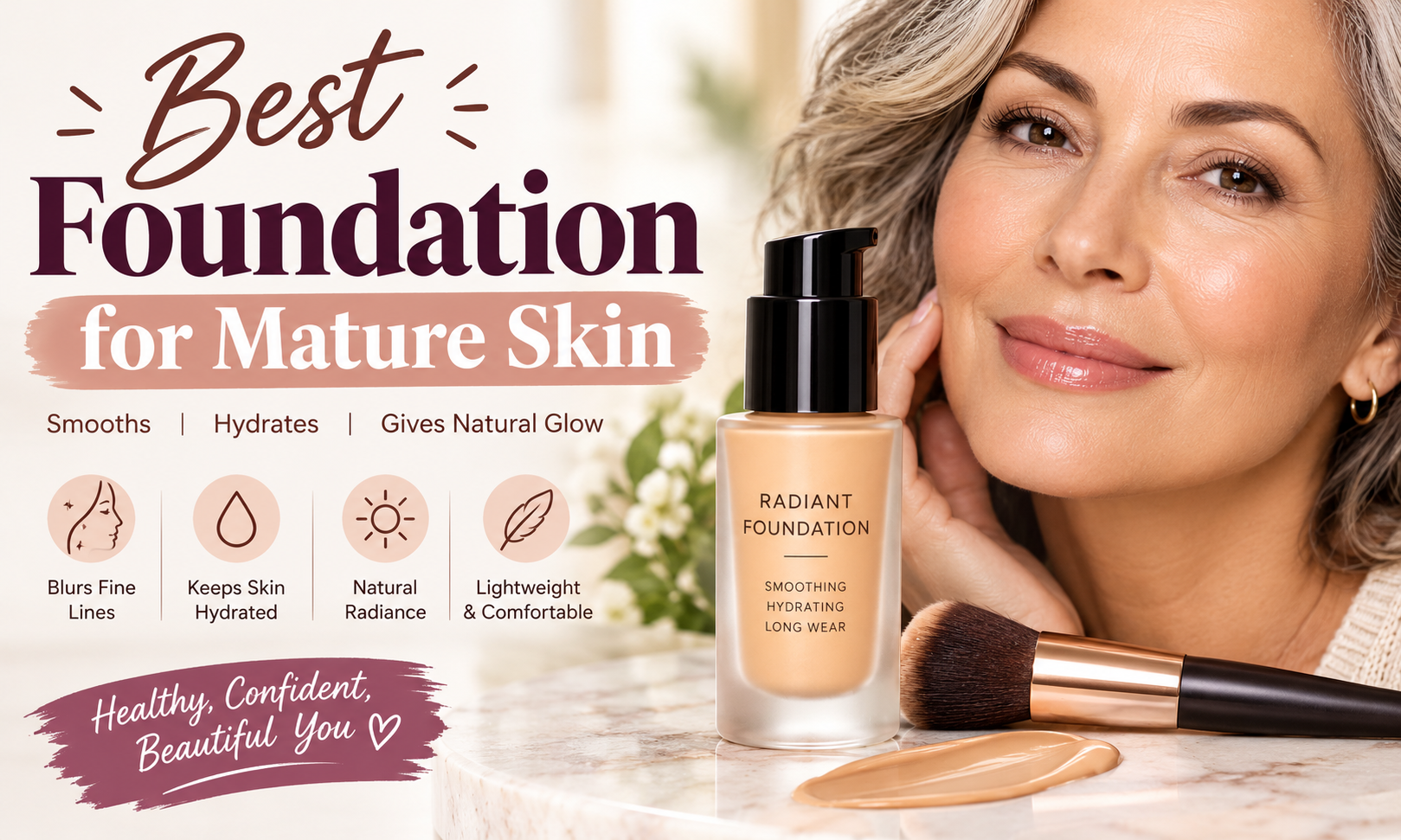
Quick answer: The best foundation for mature skin is a lightweight, hydrating formula with a natural or satin finish and buildable coverage. Heavy, matte or powdery bases can settle into lines, so choose skin-like textures, apply thin layers with a sponge or your fingers, and prepare your skin with moisturiser first.
Key takeaways
- Skin-like, light formulas flatter mature skin more than heavy, high-coverage bases.
- Serum foundations, skin tints and soft liquids are good starting points.
- Prep and tools matter. A damp sponge or warm fingers beat a dry brush on dry skin.
- Match your shade at the jaw and in daylight, and expect it to change with the seasons.
- Fewer layers usually look fresher than more.
Makeup should not feel like a mask, and nobody should have to hide behind it. Yet many women reach their fifties and sixties and find that the foundation that once looked flawless now settles into fine lines, highlights texture or sits in a flat, dry layer. The solution is rarely more coverage. It is usually a different texture, a lighter hand and a few small habits. This guide explains how skin changes, which formulas tend to flatter it and how to apply them so your skin looks like itself on a good day.
How does skin change with age, and why does it affect foundation?
Skin naturally changes as we get older. It tends to produce less oil, holds less water and renews itself more slowly, so it can feel drier and look more textured. Fine lines become more visible and tone can look less even. Hormonal shifts around menopause can add dryness or sensitivity for some people.
This matters for makeup because heavy, matte foundations sit on the surface and can emphasise lines and dry patches. Lighter formulas that move with the skin and reflect a little light tend to look softer. None of this means you should stop wearing foundation. It means choosing for your skin as it is now.
What should you look for in a foundation for mature skin?
A natural or satin finish
A flat matte finish can look chalky on dry skin. A satin or natural finish gives a little light reflection, which blurs lines more gently. Avoid very shimmery formulas, which can pick out texture.
A lightweight, flexible formula
Serum foundations, skin tints, tinted moisturisers and thin liquids move with your face. They also let you control coverage by building up where you need it.
Buildable coverage
Medium coverage suits most people. If you want more, apply a second thin layer to only the areas that need it, rather than covering the whole face with a thick layer.
Hydrating ingredients
Glycerin, hyaluronic acid and squalane help formulas feel comfortable. Ingredients change between versions of a product, so check the label.
The right shade and undertone
A shade that is too light will look ashy, and one that is too dark will look heavy. Undertones matter too. Warm, cool and neutral shades can look very different against your skin.
How were these foundations chosen?
The list below is based on manufacturer descriptions, widely available products and the qualities that tend to suit mature skin. It is not the result of hands-on testing by our team. Formulas, shade ranges and prices differ between countries and retailers, and not every product is sold everywhere. Treat the list as a place to start, and sample before you commit to a full bottle.
What are the best foundations for mature skin?
L’Oréal Paris Age Perfect Radiant Serum Foundation: best drugstore pick
This foundation is designed for mature skin and combines a serum-like texture with a luminous finish. It is lightweight and buildable, which makes it a flexible choice if you want a fresher look without a heavy layer. Check the packaging for current SPF information, which varies by market.
Giorgio Armani Luminous Silk Foundation: best for a soft glow
Luminous Silk is a classic for people who want a natural, radiant finish. It is a fluid liquid that blends easily and tends to look like skin rather than makeup. It sits at the luxury end of the price range, so it is a good option for readers who prefer to invest in one great base.
Clinique Even Better Glow: best for even tone with a lit look
Clinique’s glow foundation is aimed at people who want to even out tone while keeping a healthy shine. It suits dry to normal skin. If you have oily patches, a light dusting of powder in the T-zone helps it last.
Maybelline Fit Me Dewy and Smooth: best budget dewy option
A widely available liquid foundation with a dewy finish, it is a sensible pick for dry skin on a budget. It offers light to medium coverage, so spot-conceal where needed.
Estée Lauder Double Wear: best for oily or combination mature skin
Double Wear is known for staying power and medium to full coverage. It is a good fit if your skin is combination or oily, or if you need makeup to last through a long day. Because it is a long-wear formula, it can feel heavy on very dry skin, so use a hydrating primer or choose a different option if that is you.
A skin tint: best for a barely-there finish
A skin tint is a sheer, light base that evens tone without covering freckles or texture. Many readers find these the most flattering option for everyday wear. Dab it on with fingers, then add concealer only where you need it.
How do you find your foundation shade?
Getting the shade right does more for your skin than any formula. A few simple steps help.
- Test along the jaw, not on the back of your hand. Your face and neck are the colours you need to match.
- Try three shades, one that looks right, one a touch lighter and one a touch deeper. Swipe them in stripes and look for the one that disappears.
- Wait a few minutes. Some foundations darken as they settle, and the true colour shows after ten minutes.
- Check in daylight. Shop lighting can be unforgiving or flattering, so step outside or stand by a window.
- Think about the seasons. If your skin tans in summer, you may need two shades or a tinted moisturiser that adapts.
- Ask for a sample. Many counters and online shops offer small samples or testers, and it is worth the extra effort.
Your undertone matters too. If gold jewellery looks better on you, you may lean warm. If silver looks better, you may lean cool. If both work, you may be neutral. Do not worry if you cannot tell, since shade ranges often label warm, cool and neutral versions.
Which finish suits which occasion?
- Everyday and work: a skin tint or light serum foundation for a fresh, natural finish.
- Evening events: a medium-coverage, satin foundation with a little concealer where needed.
- Photographs: avoid heavy powder and high-SPF formulas that can leave a pale cast under a camera flash. Test in a photo first.
- Warm weather: go lighter and use blotting paper rather than extra powder through the day.
- Winter: a more hydrating formula and a richer moisturiser underneath.
Which foundation suits which skin type?
| Skin type | What to look for | Finish |
| Dry mature skin | Serum foundation, hydrating liquid, tinted moisturiser | Dewy or satin |
| Combination mature skin | Light liquid or skin tint, powder only in the T-zone | Natural |
| Oily mature skin | Lightweight long-wear liquid, blotting papers | Soft matte to natural |
| Sensitive mature skin | Fragrance-free liquid or tint | Natural |
If you have sensitive skin, you may also like our guide to the best moisturizer for sensitive skin to prepare your base.
How do you apply foundation on mature skin?
Prepare the skin
Cleanse, moisturise and give your skin a few minutes to absorb. If you need sun protection, apply a sunscreen first. A foundation with SPF is a helpful bonus, but because people usually wear a thin layer of foundation, a dedicated sunscreen is more dependable. The American Academy of Dermatology recommends a broad-spectrum, water-resistant sunscreen of SPF 30 or higher, explained in its sunscreen guidance. Our guide to the best lightweight sunscreen for face can help you choose one that sits well under makeup.
Use the right tools
A damp sponge presses foundation into the skin and gives a natural finish. Warm fingers work well with serum foundations and skin tints. A dense brush can give more coverage but may emphasise lines if the skin is dry. Whichever you choose, keep tools clean. Our guide on how to clean makeup brushes explains a simple routine.
Apply less than you think
Start with one pump or a few drops on the back of your hand. Dot it on the centre of your face and blend outwards, then add more only where you need it. Pay attention to the edges of the jaw and hairline so that there is no visible line.
Conceal where needed
Use a light, creamy concealer under the eyes and over blemishes after your base. Our guide to the best drugstore concealer for dry skin has gentle options. For dark circles that look blue or purple, see how to use color corrector makeup.
Set sparingly
Powder can exaggerate lines, so set only the areas that tend to shine, such as the forehead and sides of the nose. A fine mist at the end can melt everything together.
Do not forget the eyes
If your lids droop or you have hooded eyes, a clean base and a good eye primer are important. Our article on makeup tips for hooded eyes goes into detail.
What mistakes make foundation look heavy?
- Using too much product. Thin layers always look fresher.
- Applying over dry skin. Foundation highlights dryness, so moisturise first.
- Powdering the whole face. Reserve powder for oily areas.
- Choosing a shade that is too light. It can look ashy.
- Ignoring the neck. Blend down to avoid a line, but avoid staining collars.
- Using old foundation. Geisinger’s guidance suggests replacing cream makeup and foundation within about six months to a year, which you can read in their advice on makeup hygiene.
- Skipping a mirror in daylight. Artificial light can hide mismatches.
Frequently asked questions
What foundation is best for wrinkles?
A lightweight, hydrating formula with a natural or satin finish usually looks best. Serum foundations, skin tints and thin liquids move with the skin and are less likely to settle into lines.
Should mature skin use matte or dewy foundation?
It depends on your skin type. Dry mature skin often looks best with a dewy or satin finish. Oily or combination skin may prefer a soft matte or natural finish. Avoid very flat matte formulas and very shimmery ones.
How do I stop foundation settling into fine lines?
Moisturise first, use a thin layer, blend with a damp sponge and keep powder to a minimum. A lightweight formula and a small amount of product matter more than the brand.
Is a skin tint better than foundation for older skin?
Many people find that skin tints look fresher because they are sheer. If you want more coverage, a light foundation with concealer where needed may suit you better. Try both and see which feels like you.
Do I need primer for mature skin?
Not always. A good moisturiser can do the job for many people. A hydrating or smoothing primer helps if your foundation tends to slide or you want your makeup to last.