You’ve probably scrolled past them a hundred times: a sliver of fringe sitting high on the forehead, bold and a little rebellious. Then one night, with scissors in hand and a mirror in front of you, the thought arrives. Could I pull that off?
It’s a fair question, because micro bangs are one of the least forgiving haircuts around. There’s no hiding a mistake, and growing them out takes patience. But when they suit you, they look sharp, modern and effortless.
This guide walks you through what micro bangs really are, who they flatter, how to ask your stylist for them, how to trim them yourself safely, and what daily life with them looks like.
What Are Micro Bangs?
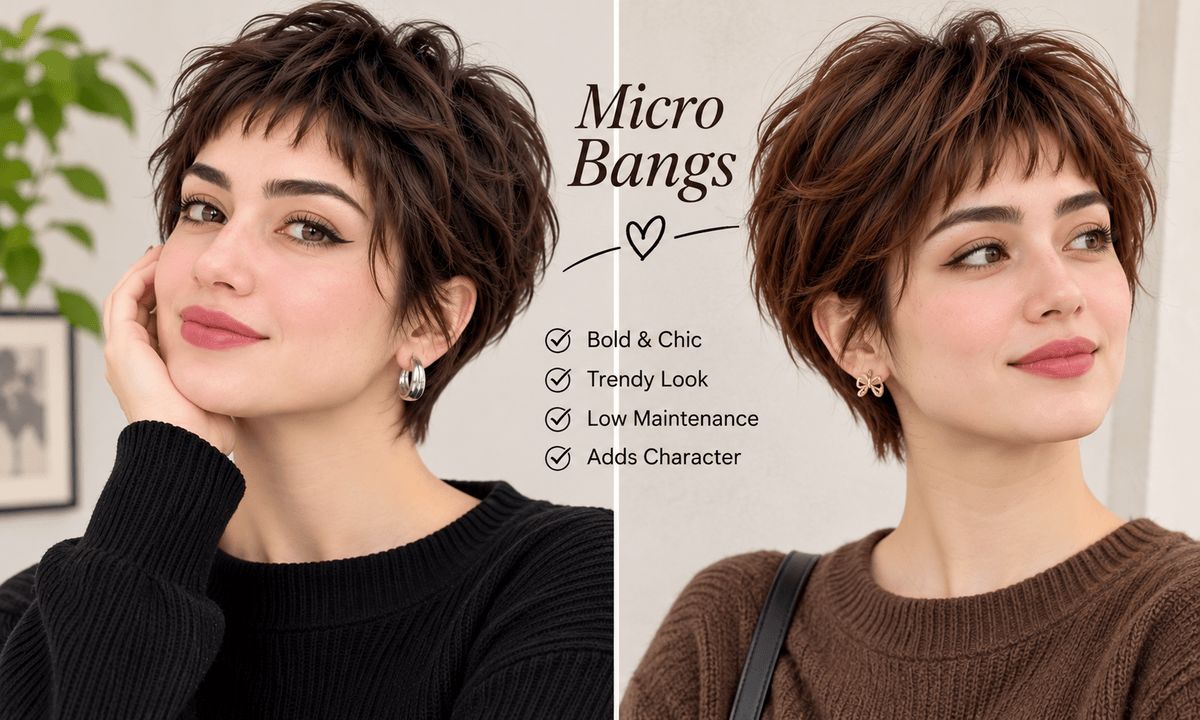
Micro bangs are an extra-short fringe that ends well above the eyebrows, usually somewhere between the middle of the forehead and just above the brow line. They are also called micro fringe, and many people use the term interchangeably with baby bangs.
The cut can be blunt, textured or wispy depending on your taste, but the defining feature is always the length. Unlike a regular fringe that skims the brows or touches the lashes, this one leaves most of your forehead on display.
Micro Bangs vs. Baby Bangs: Is There a Difference?
Stylists don’t all agree on where one ends and the other begins. A common way to separate them:
- Baby bangs sit around the upper-to-middle forehead and often have a soft, feathery finish.
- Micro bangs are shorter still, often cut closer to the hairline, and usually look more graphic and deliberate.
If you bring a photo to your appointment, the photo matters more than the name. Two stylists can hear “micro” and picture different lengths.
Who Actually Suits Micro Bangs?
Short fringe works for more people than you’d expect, but it works best when a few conditions line up. Let’s go through them one at a time.
Face Shape
Face shape isn’t a rulebook, yet it’s a useful starting point.
- Oval faces are the easy case. Nearly any fringe length works, and micro bangs add a fashion-forward edge.
- Heart-shaped faces can wear them well because the fringe adds width at the top without drawing attention to a narrower chin. A slightly wispy version tends to feel softer.
- Long or oblong faces often benefit from fringe because it visually shortens the forehead. A very short cut exposes more of it, though, so a lighter, textured finish usually looks better than a hard, blunt line.
- Square faces can use micro bangs to contrast a strong jawline. Softer, slightly curved edges balance the angles nicely.
- Round faces can wear micro bangs too, but it’s more of a style choice than a flattering shortcut. A sharp straight line across the forehead can emphasize roundness, so ask for a subtle curve or a wispy edge.
Hair Texture
Straight and fine-to-medium hair takes this cut most predictably. The line stays where you cut it, and styling takes a few minutes.
Wavy hair works well if the fringe is cut a little longer than you want it to finish, since waves lift and shorten once dry. Curly and coily hair can carry micro bangs beautifully, but the shrinkage is real. A section that looks long while wet can spring up dramatically, so most stylists cut curly fringe dry or in its natural state.
Very thick hair is manageable as long as the fringe section is kept small and thinned out slightly. Otherwise it can look heavy and boxy.
Hairline, Forehead and Cowlicks
This is the factor people overlook, and it matters more than face shape.
Look at your hairline in natural light. A strong cowlick at the front, where hair grows in a swirl or pushes sideways, will fight a short fringe all day. A widow’s peak can look striking with micro bangs, but it changes how the line sits, so a stylist needs to work with it rather than against it.
A quick test: pull your hair back, then let it fall forward naturally and see which direction the front hairs want to go. If they spring up or part on their own, tell your stylist before any cutting happens.
The Honest Downsides Before You Commit
Plenty of articles gush about this look and skip the hard part. You deserve the full picture.
They need frequent trims. With a fringe this short, even a few weeks of growth changes the shape. Hair grows roughly half an inch a month, which doesn’t sound like much until your micro fringe starts reaching your eyebrows.
They show everything. A short fringe highlights your forehead, hairline, any acne or texture there, and the exact shape of your brows. That’s not a problem, but it’s a reality.
They don’t tolerate bad weather or sweat. Humidity, heat and gym sessions can flatten or frizz the fringe. Some people find themselves restyling it more than once a day.
They take a while to grow out. Going from micro to chin-length bangs can take several months. Many people bridge that gap with pins, headbands or a side sweep.
If those trade-offs sound acceptable, keep going. If they make you nervous, consider starting with a longer fringe (our guide to choosing the right fringe length walks through the options) and moving shorter later.
How to Ask Your Stylist for Micro Bangs
A great result starts with a clear conversation. Walk in prepared.
- Bring two or three reference photos, ideally of hair similar to yours in texture and thickness.
- Point to the exact length on your own face. Say “here, halfway up my forehead” rather than relying on a word like “short.”
- Choose your finish: blunt, soft, wispy or curved. Each looks quite different.
- Mention your cowlick or hairline quirks before the first snip.
- Ask how to style them and what products your hair texture needs.
A good stylist may suggest starting a touch longer and cutting shorter in a second pass. That’s not timidity. Hair can always come off, but it can’t be put back.
How to Cut Micro Bangs at Home, Step by Step
A salon is the safer route, especially for your first time. Still, many people maintain the cut between appointments, and some do it from scratch. If you try it, go slowly.
What you’ll need: sharp hair-cutting scissors (not kitchen or craft scissors), a fine-tooth comb, clips, a mirror with good lighting, and a steady hand.
The Process
- Start with clean, fully dry hair unless you have curls you plan to cut in their natural pattern. Style it the way you usually wear it.
- Section off the fringe. Take a small triangle of hair starting at the front of the crown and narrowing to the front hairline. Clip everything else out of the way. Keep the section narrow; a wide one makes the fringe look heavy.
- Comb the section straight down and hold it between two fingers, away from the face.
- Decide your length and mark it against your forehead with the comb.
- Cut a tiny amount first. Hold the scissors vertically and snip into the ends (point-cutting) for a softer finish, or cut straight across for a blunt line.
- Check and adjust. Let go of the hair, see where it falls, and trim more only if needed.
- Soften the edges with small vertical snips if the line looks too harsh.
Cutting dry hair shows you the actual result. Cutting wet hair is a classic mistake, because it dries shorter than you expect.
Styling Micro Bangs Day to Day
The good news: once the cut is right, styling takes under five minutes.
Straight Hair
Use a small round brush and a blow dryer on low heat. Brush the fringe across your forehead in both directions to break any natural part, then finish with the brush pointing down. A light dusting of dry shampoo at the roots keeps oil from making the fringe separate.
Wavy Hair
Keep the fringe slightly damp, apply a pea-sized amount of lightweight styling cream, and let it air dry or diffuse it on low. Don’t brush it once dry. Use your fingers to shape the pieces.
Curly and Coily Hair
Define the fringe with a curl cream or gel while it’s wet, then diffuse gently. Avoid touching it much while it dries. A satin scarf at night helps preserve shape and reduce frizz.
Quick Tips That Make a Real Difference
- Wash your fringe separately in the sink between full washes. It gets oily faster than the rest of your hair because it sits against your forehead.
- Use a mini flat iron or a tiny round brush for control.
- Keep a small tin of dry shampoo or a lightweight powder in your bag.
- A tiny amount of flexible-hold spray prevents flyaways without stiffness.
Mistakes That Ruin Micro Bangs
Most disappointing results come from a handful of avoidable errors.
Cutting too wide a section. A fringe that stretches too far toward the temples looks like a helmet. Keep it narrow and let it blend gradually into the rest of your hair.
Ignoring the cowlick. A short fringe will pop up or part wherever your hair wants to go. Work with that direction rather than trying to force it.
Using the wrong scissors. Dull or non-hair scissors crush the ends and leave a ragged edge.
Over-styling. Too much product or heat flattens the look and speeds up oiliness.
Waiting too long between trims. Micro bangs look best when they’re fresh. Plan a quick trim every three to four weeks, or sooner if you’re particular about the length.
Growing Out Micro Bangs Without the Awkward Phase
Whether you love them or you’re done, the transition takes planning.
- Stop trimming, but ask your stylist for shaping rather than cutting length.
- Pin the fringe back with small clips or a headband when it’s at its in-between stage.
- Try a side sweep once it’s long enough to reach the brow.
- Blend it into face-framing layers so it merges with the rest of your hair instead of sticking out as a separate block.
Expect it to take a few months. Patience and a good set of hair pins make the process far easier.
How Micro Bangs Compare to Other Fringes
| Style | Typical Length | Maintenance | Best For |
| Micro bangs | Mid-forehead or higher | High (every 3–4 weeks) | Bold, editorial looks |
| Baby bangs | Upper forehead | High | Soft, playful styles |
| Blunt bangs | At or near the brows | Medium | Strong, classic lines |
| Curtain bangs | Cheekbone to brow, parted | Low | Easy, versatile styling |
| Side-swept bangs | Varies | Low | Gradual transitions |
If you’re torn, curtain bangs are the gentlest introduction to fringe. Micro bangs are the opposite end of the scale.
Frequently Asked Questions
Do micro bangs make your forehead look bigger?
They can make the forehead more noticeable, since the fringe stops higher and exposes more skin. A soft, wispy finish or a slight curve tends to reduce that effect.
How often should you trim micro bangs?
Most people trim every three to four weeks. Because the fringe is so short, even small amounts of growth change the shape quickly.
Can you get micro bangs with curly hair?
Yes. Curly hair can look striking with a short fringe, but it should be cut dry or in its natural curl pattern, since curls shrink as they dry. Choose a stylist experienced with curls.
Are micro bangs suitable for a round face?
They can be, with some adjustments. Ask for a slightly curved or wispy edge rather than a hard, straight line, which can emphasize roundness.
How long do micro bangs take to grow out?
It varies by hair growth speed, but expect several months to reach eyebrow length and longer to blend fully. Hair grows around half an inch per month on average.