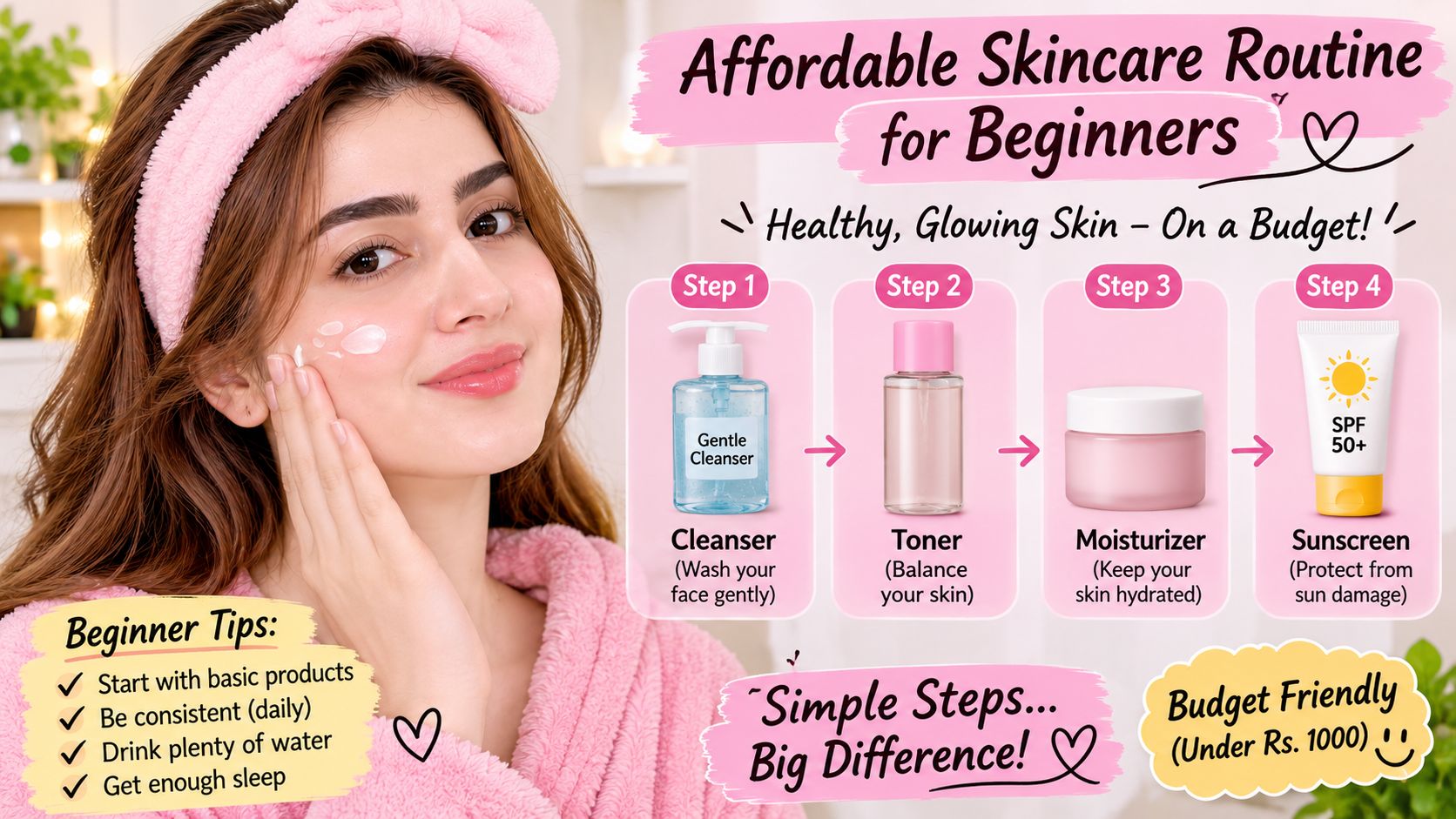
Quick answer: A basic skincare routine needs only three essentials: a gentle cleanser, a moisturiser, and a broad-spectrum sunscreen of SPF 30 or higher for the morning. Add one targeted ingredient, such as niacinamide or salicylic acid, only after your skin has settled into the basics for a few weeks.
Why Expensive Doesn’t Mean Better
Walk down any beauty aisle and you’ll notice that price and performance rarely move together. A cleanser’s job is to lift away oil, sweat and sunscreen. A moisturiser’s job is to hold water in the skin. Neither task requires a luxury jar.
What you pay for in pricier products is often packaging, fragrance, brand positioning and texture. A velvety feel is pleasant, but it isn’t proof of better results. Many affordable cheap skincare products use the same well-studied ingredients as their premium cousins, including glycerin, ceramides, hyaluronic acid, niacinamide and mineral or chemical UV filters.
That doesn’t mean every low-cost product is good. It means you should read the ingredient list and the product claims rather than the price tag. Start by judging a product on what it’s designed to do, whether it suits your skin type, and whether it’s free of things that irritate you personally.
Know Your Skin Type Before You Spend a Penny
Buying products without knowing your skin type is like buying shoes without knowing your size. It’s the most common way beginners waste money.
The Bare-Face Test
Here’s a simple way to find out where you stand. Wash your face with a gentle cleanser, pat it dry, and apply nothing. Wait an hour, then look in the mirror.
- Oily: Your face looks shiny all over, especially across the forehead, nose and chin.
- Dry: Your skin feels tight, rough or flaky, and may even look dull.
- Combination: The T-zone is shiny, while the cheeks feel normal or dry.
- Normal: Your skin feels comfortable, neither greasy nor tight.
- Sensitive: Your face stings, reddens or itches easily when you try new products. Sensitivity can overlap with any of the types above.
Your skin can also change with the seasons. Many people find their face oilier in humid summers and drier when winter heating kicks in, so treat this test as a snapshot rather than a life sentence.
The Four-Step Basic Skincare Routine
A good routine is boring in the best possible way. The skincare routine order that dermatologists commonly recommend runs from the thinnest, lightest product to the thickest, finishing with sunscreen in the morning.
| Time of day | Step 1 | Step 2 | Step 3 | Step 4 |
| Morning | Gentle cleanser (or just water) | Optional treatment | Moisturiser | Sunscreen SPF 30+ |
| Night | Gentle cleanser | Optional treatment | Moisturiser | None |
Let’s look at each step properly.
Step 1: Cleanse Without Stripping
Cleansing removes dirt, excess oil, pollution particles and the day’s sunscreen. A good cleanser leaves your face clean, not squeaky. If your skin feels tight straight after washing, the formula is too harsh for you.
Look for gentle, fragrance-free formulas with a creamy or gel texture. Dry and sensitive skin usually does best with creamy cleansers, while oily skin tends to like gel formulas. Use lukewarm water, since very hot water can strip the skin’s natural oils.
In the morning, you can get away with rinsing with water alone if your skin is dry or sensitive. At night, cleanse properly, especially if you’ve worn sunscreen or make-up.
Step 2: Add a Treatment (Only If You Need One)
Treatments, often called “actives”, are products that target a specific concern such as breakouts, dark marks or fine lines. Beginners often rush this step, and it’s where most irritation begins.
Skip it entirely for the first two to three weeks. Once your cleanse, moisture and sun protection habits feel automatic, choose one treatment that matches your main concern. We’ll cover which ones suit which problems in a moment.
Step 3: Moisturise, Even If Your Skin Is Oily
This is the step oily-skinned beginners tend to skip, and it backfires. Skin that lacks water can respond by producing more oil, so dropping moisturiser often makes shine worse rather than better.
Choose a lightweight gel or lotion if you’re oily, and a richer cream if you’re dry. Ingredients worth looking for include glycerin, hyaluronic acid and ceramides, which help the skin hold water and keep its protective barrier strong. Basic, fragrance-free moisturisers from pharmacy and supermarket ranges often do this job perfectly well.
Step 4: Protect With Sunscreen Every Morning
If you can only afford one product beyond a cleanser, make it sunscreen. Ultraviolet light is the main driver of visible skin ageing, uneven tone and dark marks, and it’s also linked to skin cancer. No serum can undo a daily lack of sun protection.
Choose a broad-spectrum sunscreen of SPF 30 or higher, which protects against both UVA and UVB rays. A common guide for the face is about two fingers’ length of product. Reapply roughly every two hours if you’re outdoors for long stretches, and use it on cloudy days too, since UV light passes through cloud.
The best sunscreen is the one you’ll genuinely wear. If a formula feels greasy or leaves a white cast on your skin, try another texture rather than abandoning sun protection altogether.
What to Buy First When Money Is Tight
You don’t have to buy everything at once. If your budget is limited, build the routine in this order:
- Sunscreen: The highest-impact product for long-term skin health.
- A gentle cleanser: Cheap, simple and necessary.
- A basic moisturiser: Keeps the barrier healthy.
- One targeted treatment: Only when your skin is ready for it and you’ve identified a clear goal.
Picture this scenario. Priya is a student on a tight monthly allowance. She wants clearer skin but can’t spend much. Instead of buying a five-step set, she picks a gentle gel cleanser, a lightweight moisturiser and a daily sunscreen. After a month, she adds a salicylic acid product two nights a week for her T-zone. She spends far less than her friends do and, more importantly, she can tell exactly which product is doing what.
That last point matters. When you introduce products one at a time, you learn what works and what doesn’t. Launch six new products together and a breakout becomes impossible to trace.
Budget-Friendly Ingredients Worth Knowing
Once you reach the treatment stage, a few widely available ingredients cover most beginner concerns. You don’t need all of them. Pick one.
- Niacinamide: Helps with oiliness, uneven tone and a weakened skin barrier. It’s well tolerated by most people and is found in many low-cost serums.
- Salicylic acid: A beta hydroxy acid that gets into pores, which makes it useful for blackheads and mild breakouts.
- Hyaluronic acid: Draws water to the skin’s surface and works best layered under a moisturiser on slightly damp skin.
- Vitamin C: An antioxidant that can help brighten skin and support sun protection, though it’s best used in the morning under sunscreen. Some formulas are unstable, so check that the packaging is opaque or airtight.
- Retinol (a retinoid): Supports smoother texture and fewer breakouts over time. It’s powerful, so start low and slow.
If you’re pregnant or breastfeeding, or you’re treating persistent acne, ask a doctor or pharmacist before starting retinoids or strong acids.
How to Add Actives Without Damaging Your Skin Barrier
Your skin barrier is the outer layer that keeps moisture in and irritants out. Overdo exfoliating acids or retinol, and that barrier weakens. You’ll notice stinging, redness, tightness, peeling or sudden breakouts.
A careful approach looks like this:
- Patch test first. Apply a small amount behind your ear or on your inner forearm for a couple of days.
- Start two or three nights a week. Increase only if your skin stays calm.
- Introduce one product at a time. Wait at least two to three weeks before adding another.
- Use sunscreen daily. Many actives make skin more sensitive to sun.
Retinoids and strong exfoliating acids are generally best used at night and not on the same evening, at least until you know how your skin responds. If your face feels sore, pause the active and return to cleanser, moisturiser and sunscreen until it feels normal again.
Simple Sample Routines for Different Skin Types
Use these as starting points rather than rules. Adjust as you learn how your skin behaves.
Oily or Acne-Prone Skin
- Morning: Gel cleanser, lightweight moisturiser, SPF 30+ sunscreen.
- Night: Gel cleanser, a niacinamide or salicylic acid product (a few nights a week), lightweight moisturiser.
Dry Skin
- Morning: Rinse with water or a creamy cleanser, rich moisturiser with ceramides, SPF 30+ sunscreen.
- Night: Creamy cleanser, hyaluronic acid on damp skin, rich moisturiser.
Sensitive Skin
- Morning: Fragrance-free gentle cleanser, simple moisturiser, mineral sunscreen if chemical filters sting.
- Night: Gentle cleanser, simple moisturiser. Add nothing else until your skin is calm.
Common Mistakes That Waste Money (and Skin)
Most beginner skincare problems come from doing too much rather than too little.
Buying everything at once. A full routine from a trending brand can cost more than you’ll ever get value from, and if a product irritates you, you won’t know which one caused it.
Scrubbing hard. Gritty exfoliators and rough cloths can create tiny tears and inflame skin. Gentle always beats aggressive.
Skipping sunscreen on grey days. Many people treat it as a summer product. It’s a year-round habit.
Trusting every viral hack. Lemon juice, toothpaste and raw baking soda on the face are commonly shared home “remedies” that can burn or irritate skin. Even traditional ingredients deserve caution. For example, you can read about what alum actually is and how it is used, including why a patch test matters before putting it on your skin. Its use as an astringent rests mostly on long tradition rather than strong research.
Switching products too quickly. Skin needs time. Changing your cleanser every week resets the clock each time.
Ignoring ingredient overlap. Using a cleanser, toner, serum and moisturiser that all contain strong acids is a fast route to a damaged barrier.
How Long Until You See Results?
Patience is the unglamorous secret of skincare. Moisturiser and sunscreen can improve comfort and appearance within days. Breakouts, dark marks and texture usually take longer, often several weeks to a few months, because skin renews itself gradually.
Give any new product at least four to six weeks unless it’s causing clear irritation. Retinoids frequently take around two to three months to show their full effect. Taking a photo in the same lighting once a month can help you see progress that the mirror hides day to day.
When to Get Professional Advice
A budget routine can handle everyday concerns, but some problems need an expert. See a pharmacist, GP or dermatologist if you have painful or deep acne, breakouts that leave scars, a rash that won’t settle, or a mole or spot that changes shape, colour or size. Early advice is often cheaper in the long run than months of trial and error.
Frequently Asked Questions
What is the simplest skincare routine for a beginner?
Cleanse, moisturise and protect. In the morning, rinse or cleanse, apply moisturiser, then finish with SPF 30+ sunscreen. At night, cleanse and moisturise. Add a treatment product only after a few weeks.
How much should a beginner spend on skincare?
There’s no fixed amount, and you don’t need to spend heavily. A cleanser, moisturiser and sunscreen from pharmacy or supermarket ranges can cover the essentials. Put the largest share of your budget into sunscreen, since it has the strongest evidence behind it.
In what order should I apply skincare products?
Apply them from thinnest to thickest: cleanser, treatment or serum, moisturiser, then sunscreen in the morning. Water-based products go on before oil-based ones.
Do I need a toner or serum as a beginner?
No. Neither is essential. Toners and serums are optional extras, useful only if they address a specific concern like oiliness or uneven tone.
Can I use the same products morning and night?
Often yes. Many people use the same cleanser and moisturiser twice a day. The main differences are sunscreen in the morning and any treatment you choose for the evening, such as retinol.
Final Thoughts
An affordable skincare routine for beginners isn’t a watered-down version of the real thing. It is the real thing: a gentle cleanse, steady moisture and daily sun protection, with one carefully chosen extra if you need it. Everything else is optional.