You’ve saved the photos. A glossy, sunlit penny-orange that looks incredible on screen. Then you walk out of the salon, or finish the box dye at home, and the colour is either too orange, too brassy or too flat. Or it looks perfect for two weeks and then drains away.
That frustration is common. Copper hair color is one of the most striking shades you can wear, and also one of the trickiest to get right and keep.
This guide covers what copper hair actually is, which shades suit which skin tones, how the dyeing process works, and how to stop the fade. You’ll also get a clear answer on copper versus auburn, and what to tell your colourist so you leave with the colour you pictured.
What Is Copper Hair Color?
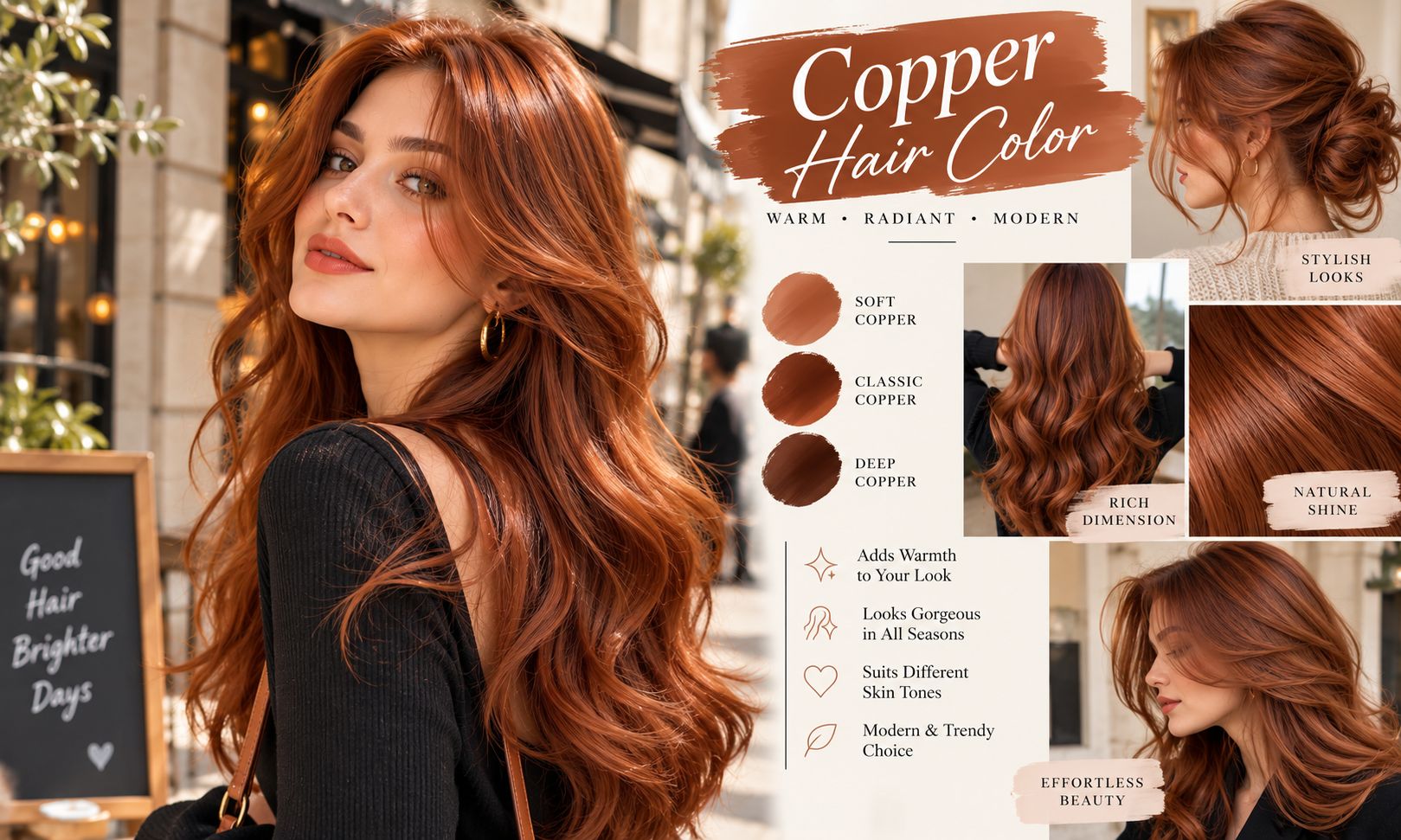
Copper is a warm, reddish-orange hair shade that sits between red and golden blonde. It takes its name from the metal, and the resemblance is obvious: think of a new penny or a polished kettle catching the light.
The colour comes from warm red-orange pigment. In dye terms, copper formulas are built on strong red and orange tones, often with a little gold to add brightness.
Copper isn’t a single shade. It runs from soft, peachy tones to deep, almost brown versions with just a flicker of warmth. That range is why it flatters so many people, and why “I want copper” isn’t enough of a brief on its own.
Is Natural Copper Hair Real?
Yes, and it’s rarer than most people think. Natural copper hair is a form of red hair, linked to a gene variant called MC1R and a higher proportion of a reddish pigment called pheomelanin. Many natural redheads have copper tones, especially in sunlight. Most copper hair you see, though, comes from a bottle.
Copper Hair Shades: Find Your Version
Think of copper as a dial rather than a switch. Turn it towards gold and you get something bright and sunny. Turn it towards brown and it becomes rich and understated.
Light Copper Hair
Light copper hair is soft and peachy, sometimes called strawberry blonde or ginger blonde. It’s the brightest, most eye-catching version. It also needs the most lightening, which means more damage risk and more upkeep.
Medium Copper
This is the classic penny shade: vivid orange-red with a warm glow. It’s the version most people picture first, and it photographs beautifully in daylight.
Dark Copper Hair
Dark copper hair is a deep, chestnut-leaning shade where the warmth shows up mainly in the light. It’s the easiest route if your natural hair is dark brown or black, because it needs far less lightening. It’s also the most forgiving as it grows out.
Copper Balayage and Highlights
Not ready to commit your whole head? Copper balayage paints warm strands through brown or blonde hair, so there’s no hard regrowth line. It’s lower maintenance and softer on the hair. Copper money-piece highlights around the face are a popular way to test the colour before going all in.
Copper vs Auburn: What’s the Difference?
People mix these up constantly. Copper leans orange and warm, like a bright penny. Auburn leans red-brown, with a deeper, almost mahogany feel. If you hold your swatch against a white towel and see orange, it’s copper. If you see reddish brown, it’s auburn.
Which Skin Tones Suit Copper Hair?
Copper is usually described as flattering on warm undertones, and that’s a good starting point. If gold jewellery suits you better than silver and your veins look greenish, copper tends to bring out your natural glow.
But it isn’t limited to warm skin. Deeper coppers and subtle copper-brown blends work on many cool and neutral undertones too. The trick is adjusting the intensity.
- Fair skin: Soft, light copper and strawberry tones look natural. Very intense orange can make redness in the skin more noticeable.
- Medium or olive skin: Medium to dark copper looks rich and balanced.
- Deep skin tones: Dark copper, copper-brown and copper highlights add warmth without looking harsh.
A quick test: hold a copper-toned scarf or top near your face in daylight. If your skin looks brighter, you’re on the right track. If you look tired or flushed, try a deeper or browner version.
How Copper Hair Dye Works (and Why Your Starting Colour Matters)
Here’s the part most guides skip. Copper is a warm shade, and warm shades show up differently depending on the hair underneath.
Hair dye can’t make hair darker and lighter at once. To get a bright copper, your hair usually needs to be lifted to a light brown or dark blonde base first. Dye then deposits the copper tone on top.
If Your Hair Is Dark Brown or Black
You have two realistic options:
- Go for dark copper. A lighter, warm-toned dye can show as a subtle copper glow without heavy bleaching.
- Lighten first. Bleach lifts your natural pigment, then copper dye goes over it. This gives a brighter result but takes more time, costs more and stresses the hair.
Bleaching dark hair often reveals an orange-red stage along the way. That can be a useful starting point for copper, but only a professional should judge how far to take it.
If Your Hair Is Light Brown or Blonde
This is the easy route. Light hair accepts copper dye readily, often without bleaching. If you’re a natural blonde, copper can come out very bright, so mention that to your colourist.
If Your Hair Is Already Coloured
Previous dye changes the outcome. Black box dye is notoriously hard to lift. Henna can react unpredictably with chemical dyes. And previously bleached hair is porous, so it takes copper quickly but also loses it quickly. Be honest about your hair history. It’s the single most useful thing you can tell a colourist.
Salon or Home Copper Hair Dye?
Copper at home is possible, but it’s less forgiving than brown or black.
Choose the salon if:
- Your hair is dark and needs lightening
- You’ve coloured it before, especially with black or box dye
- You want a specific tone, like peachy copper or copper balayage
Home dye can work if:
- Your hair is light brown, dark blonde or already lightened
- You’re after a semi-permanent shade
- You’re happy with a slightly different result than the box photo
One practical tip: do a strand test. Dye a small hidden section first, wait the full time, and check the result in daylight. It takes an hour and can save months of regret.
What to Say to Your Colourist
Vague requests lead to surprises. Bring two or three photos, including one you don’t want, such as “too orange” or “too red.” Ask for the tone (peachy, golden, deep), the maintenance level and the approximate cost. A good colourist will tell you honestly if your goal needs two sessions.
Copper Hair for Weddings and Big Events
Copper photographs warmly, which makes it a popular choice for brides and wedding guests. The one rule is timing. Finish your colour at least a week or two before the event so any tone adjustments can happen without panic. If you’re planning your whole look, our bridal hair and makeup guide covers how to coordinate styling with your overall look. Remember that warm hair changes which lip and blush shades work best, so test your makeup against the final colour.
Why Copper Fades So Fast (and How to Slow It Down)
Copper’s biggest drawback is that it doesn’t last. Red and orange dye molecules are generally smaller and sit less securely in the hair than other colour pigments, so they wash out sooner. That’s why red and copper shades are known as the fastest-fading colours.
Heat, sunlight, hard water and frequent washing all speed it up. The good news: a few habits make a real difference.
Your Copper Care Routine
- Wash less often. Aim for two or three times a week if your scalp allows. Dry shampoo helps between washes.
- Use cool or lukewarm water. Hot water opens the hair cuticle and lets colour escape.
- Switch to sulfate-free shampoo. Choose products labelled for coloured hair.
- Add a colour-depositing conditioner. Copper or red-toned conditioners top up the shade every few washes.
- Protect from heat. Use a heat protectant before blow-drying or styling, and turn the temperature down.
- Cover up in strong sun. UV light fades colour, so a hat or UV-protective hair product helps.
- Rinse after swimming. Chlorine can strip and dull copper quickly.
Do You Need Purple Shampoo?
No. Purple shampoo cancels yellow tones, so it’s for blondes. Copper doesn’t go yellow; if it turns brassy or too orange, a blue-toned product is what counters excess orange. Most people with copper hair don’t need either, just a good colour-safe routine.
How Often to Refresh
Plan a gloss or toner every four to six weeks to bring back shine and brightness. Full root touch-ups usually come every six to eight weeks, depending on how fast your hair grows and how strong the contrast is with your natural colour. Balayage and dark copper stretch much longer between visits.
Common Copper Hair Mistakes
- Choosing a shade from a screen. Filters and lighting exaggerate colour. Look at swatches in daylight.
- Skipping the conditioning. Lightened hair is more porous and needs regular moisture, not just colour care.
- Going too bright for your skin. If a shade looks harsh in photos, step down a tone.
- Ignoring the fade stage. Copper often fades to a muted orange-gold. Plan for a refresh before it reaches that point.
- Mixing DIY fixes. If a colour goes wrong, stop and see a professional before layering more dye.
Can You Wear Copper if You Have Gray Hair?
Yes, and it’s one of the better shades for blending. Warm copper tones soften the look of gray and don’t leave the stark regrowth line that dark brown or black can. Semi-permanent copper often fades gently, which many people prefer. Resistant gray hair may need a permanent formula for full coverage, so check with your colourist.
Frequently Asked Questions
What is copper hair color?
Copper hair color is a warm reddish-orange shade, similar to a polished penny. It sits between red and golden blonde and ranges from soft peachy tones to deep copper-brown.
Does copper hair suit every skin tone?
It suits warm undertones most naturally, but most skin tones can wear it. Choose lighter, peachy shades for fair skin and deeper copper-browns for olive or deep skin tones, and test in daylight first.
Do I have to bleach my hair to go copper?
Not always. Light brown and blonde hair can usually take copper dye directly. Dark brown or black hair needs lightening for a bright copper, or you can choose a deeper copper that shows as a warm glow.
How long does copper hair dye last?
Semi-permanent copper often fades noticeably within a few weeks, and permanent copper lasts longer but still fades faster than most other shades. Cool washes, sulfate-free products and colour-depositing conditioner help extend it.
Is copper hair high maintenance?
Compared with brown or black, yes. It needs gentler washing, regular glosses and a little extra conditioning. Dark copper and copper balayage are the lowest-maintenance versions.
What’s the difference between copper and auburn?
Copper leans orange and bright, while auburn leans red-brown and deeper. Copper looks like a new penny, auburn like dark mahogany.
Final Thoughts: Is Copper Hair Color Right for You?
Copper rewards people who plan. Pick a shade that suits your skin tone, be honest about your hair’s history, and expect to put a little more effort into aftercare than you would with a neutral colour. In return, you get a shade that catches the light, flatters a wide range of complexions and rarely looks boring.
Your next step is simple. Collect three reference photos, hold them up in daylight, and book a consultation, or do a strand test if you’re dyeing at home. Start with the version of copper that feels like you, and adjust from there.