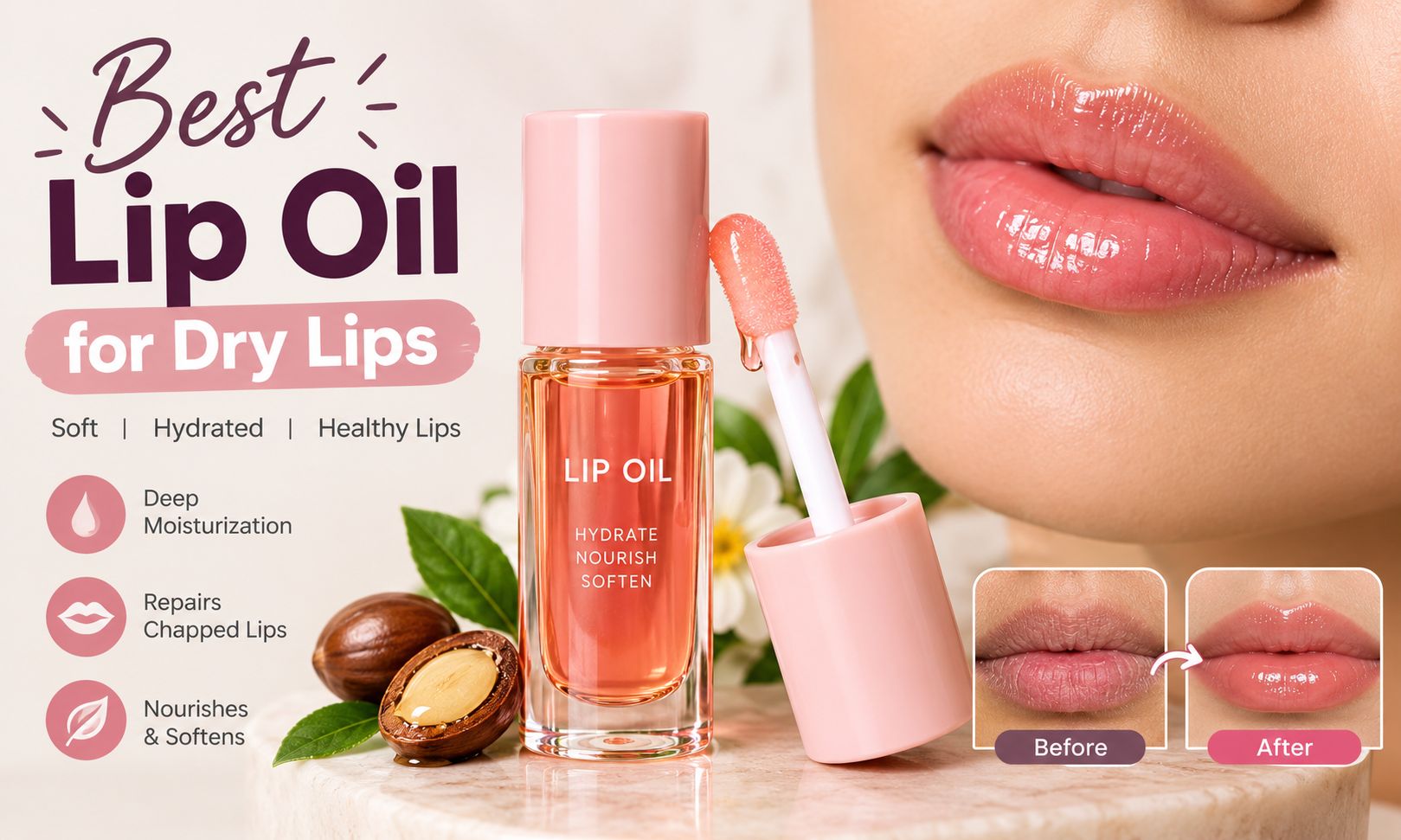
Quick answer: The best lip oil for dry lips is a non-sticky formula with nourishing oils such as jojoba, squalane or vitamin E, plus a comfortable, glossy finish. Apply it over a thin layer of lip balm if your lips are very dry, and choose a fragrance-free option if your lips sting easily.
Key takeaways
• Lip oil adds shine and a little comfort, but it is not a replacement for a proper balm on very dry lips.
• Look for oils and emollients such as jojoba, squalane and vitamin E, and avoid strong flavourings or menthol.
• Most lip oils do not contain SPF, so protect your lips separately outdoors.
• Layer, do not lick. Licking dry lips makes them drier.
• Persistent cracking, swelling or sores need a doctor’s advice.
Lip oil has gone from a trend to a bag staple, and it is easy to see why. It feels softer than a sticky gloss, looks fresher than a heavy lipstick and comes in sheer tints that suit almost everyone. But if your lips are dry, the wrong lip oil can disappoint. It may look glossy for ten minutes and leave your lips feeling just as tight. This guide explains what lip oil really does, what to look for, which picks are worth a look and how to wear them.
What is lip oil, and is it good for dry lips?
Lip oil is a liquid or lightly viscous product made from a blend of oils, often with a sheer tint. It sits somewhere between a gloss, which is thicker and stickier, and a balm, which is firmer and more protective. Most lip oils are applied with a doe-foot wand or a brush.
For dry lips, lip oil is a helpful partner rather than a complete solution. Oils soften the surface and reduce the feeling of tightness, but they do not always create a protective barrier in the way that a petrolatum-based balm does. If your lips are cracked or flaky, the American Academy of Dermatology suggests simple care such as using a lip balm and avoiding licking, as described in its advice on. Think of lip oil as the finishing touch.
Lip oil, lip gloss or lip balm: what is the difference?
What should you look for in a lip oil for dry lips?
Nourishing oils and emollients
Jojoba oil, squalane, sweet almond oil, castor oil and vitamin E are common ingredients in lip oils. They soften the skin and make the lips look smooth. Castor oil in particular gives a thicker, glossier feel.
A comfortable texture
Some lip oils are silky and almost weightless. Others feel tacky. If you hate stickiness, look for formulas described as non-sticky or lightweight, and check reviews from people with similar preferences.
A tint that suits you
A sheer tint is forgiving and easy to wear daily. Clear oils work well over lipstick or on bare lips. If your lips are very dry, avoid pigmented formulas with a matte finish, which can emphasise lines.
Ingredients to avoid if your lips are sore
Strong fragrance, cinnamon, menthol, peppermint and camphor can feel cooling at first but sting or dry out already irritated lips. If you notice burning, swelling or peeling after using a product, stop using it.
An applicator you like
Doe-foot wands give precise control. Squeeze tubes are hygienic and travel well. Pots are cheaper but can be less sanitary if you dip fingers in.
How were these lip oils chosen?
The selection below draws on manufacturer descriptions, published ingredient information and widely available products. It is not based on hands-on testing by the Glowing Magazine team. Formulas, shades and prices vary by country, so check labels before you buy and avoid anything containing an ingredient you are sensitive to.
What are the best lip oils for dry lips?
Clarins Lip Comfort Oil: best luxury pick
Clarins has built a reputation for lip oils that combine tint with a comfortable, cushiony feel. It comes in a range of shades and is usually described as hydrating and glossy rather than sticky. It is a higher priced option, so it suits readers who want a treat rather than a daily workhorse.
Dior Addict Lip Glow Oil: best for a polished finish
This is a designer lip oil known for glossy, juicy colour in a doe-foot applicator. It suits people who want an elegant finish and are happy to pay for it. Dry lips may still need a balm underneath.
NYX Fat Oil Lip Drip: best budget shine
NYX makes this lip oil at a price within reach of most people, and it comes in many shades. It is glossy and fairly thick, so it suits those who like a high-shine finish more than a barely-there feel. Some people find it slightly sticky.
e.l.f. Glow Reviver Lip Oil: best affordable tint
e.l.f.’s tinted lip oils are popular because they are cheap, come in wearable colours and are easy to find. They provide a sheer wash of colour and a comfortable shine for everyday wear.
A petrolatum balm underneath: best partner for any lip oil
This is not a lip oil, but it deserves a place here. A simple petrolatum-based balm applied at night, with a lip oil layered over it in the daytime, is a practical combination for lips that crack easily. It gives you repair at night and shine in the morning.
Product availability and exact formulas can vary, so treat these as starting points and read the current ingredient list before buying.
How do you choose a lip oil shade?
Lip oils are forgiving because most are sheer, but a little thought helps you pick one you will actually wear.
For everyday wear, choose a clear or very sheer tint that looks like your own lips, only fresher. A soft rose, peach or berry suits many skin tones.
For deeper skin tones, richer berry, plum, brown or warm red tints show up better than pale pinks, which can look washed out.
For fair skin, a clear oil or a pale pink gives a natural flush, while deeper shades add drama.
Test on your lips, not your hand. The colour of your own lips changes how a tint looks.
Look at the finish. Some oils are high shine, while others are more cushioned. Choose the one that fits your mood and your mouth.
If you are not sure, start with a clear oil that you can layer over any lipstick.
How do you make lip oil last longer?
Lip oil is not known for staying power, because eating, drinking and talking wear it away. A few tricks help.
• Apply it over a thin layer of lip balm or a matching lip liner to give it something to cling to.
• Blot your lips lightly after the first coat, then add a second thin layer.
• Avoid very oily foods and drinks immediately after applying.
• Keep a small tube in your bag so that you can top up.
Do not expect hours of wear. If you want colour that lasts, a stain or lipstick underneath with oil on top is a better answer.
How do you apply lip oil for the best results?
1. Start with a smooth surface. If your lips are flaky but not cracked, gently wipe them with a warm, damp cloth after applying a balm. Avoid harsh scrubs.
2. Apply a thin layer of balm if your lips are very dry. Let it sink in for a minute.
3. Swipe the lip oil from the centre outwards. Use the wand to glide it across the lower lip first, then press your lips together.
4. Dab and blend. Tap with a fingertip if you want a softer finish.
5. Add to the centre for a fuller look. A touch of lip oil in the middle of the lower lip creates a gentle highlight.
6 Reapply when needed. Most lip oils wear away with eating and drinking, so keep a small tube in your bag.
Can you wear lip oil over lipstick?
Yes. A thin layer over lipstick softens the finish and adds glossy depth. If you wear a matte or long-wear lipstick, keep the oil to the centre of the lips so it does not blur your edges. When you need to remove long-wear lip colour, a gentle oil-based cleanser works well, much as it does for mascara in our guide on how to remove waterproof mascara.
Does lip oil contain SPF?
Most lip oils do not, and the skin on the lips is thin and has little natural protection from the sun. If you are outside, use a lip balm labelled with a broad-spectrum SPF, and reapply it, as you would your facial sunscreen. Our guide to the best lightweight sunscreen for face explains what to look for on the label. Always check the individual product, as some brands offer SPF versions.
Which habits help dry lips?
Products alone will not fix the problem if your habits keep drying your lips out.
Stop licking and picking. Saliva evaporates quickly and leaves lips drier.
Drink water regularly. Dehydration shows up on the lips.
Use a humidifier in dry weather. Central heating dries the air. Our post on skincare tips in dry season has more ideas.
Choose gentle toothpaste. Some strongly flavoured formulas can irritate the skin around the mouth.
Breathe through your nose. Mouth breathing can dry lips overnight.
Reapply balm before bed. It works while you sleep.
When do dry lips need a doctor?
Seek medical advice if your lips are persistently cracked, bleeding, swollen or sore at the corners, if you notice white patches or sores that do not heal within a couple of weeks, or if the problem appears suddenly after starting a new medication or product. Persistent lip symptoms can be caused by allergies, infection or other conditions that need professional treatment.
Frequently asked questions
Is lip oil better than lip balm for dry lips?
Not usually. Lip oil is great for comfort and shine, but a petrolatum-based balm tends to be better at protecting and repairing very dry or cracked lips. Many people use balm at night and lip oil during the day.
Why do my lips feel dry after using lip oil?
The oil may not be creating a barrier, or the formula may contain flavourings, menthol or fragrance that irritate your lips. Try a simpler formula, apply a balm underneath and avoid licking your lips.
Can I wear lip oil over lipstick?
Yes. A thin layer on top softens a matte finish and adds shine. Dab it into the centre of the lips so your lipstick edges stay neat.
How often should I apply lip oil?
Whenever your lips feel dry or the shine has worn off. For most people that is every few hours. If you find yourself reapplying every ten minutes, switch to a heavier balm.
Is lip oil safe for everyday use?
For most people, yes. Choose formulas without ingredients that irritate you, replace products that smell or taste different and do not share them. If you notice swelling, itching or peeling, stop using the product and seek advice.
The bottom line
The best lip oil for dry lips is one that feels comfortable, looks good and works with a sensible balm routine. Look for nourishing oils, avoid irritating flavourings, protect your lips from the sun and treat lip oil as the finishing touch, not the only step. For more beauty ideas, browse our Makeup category.