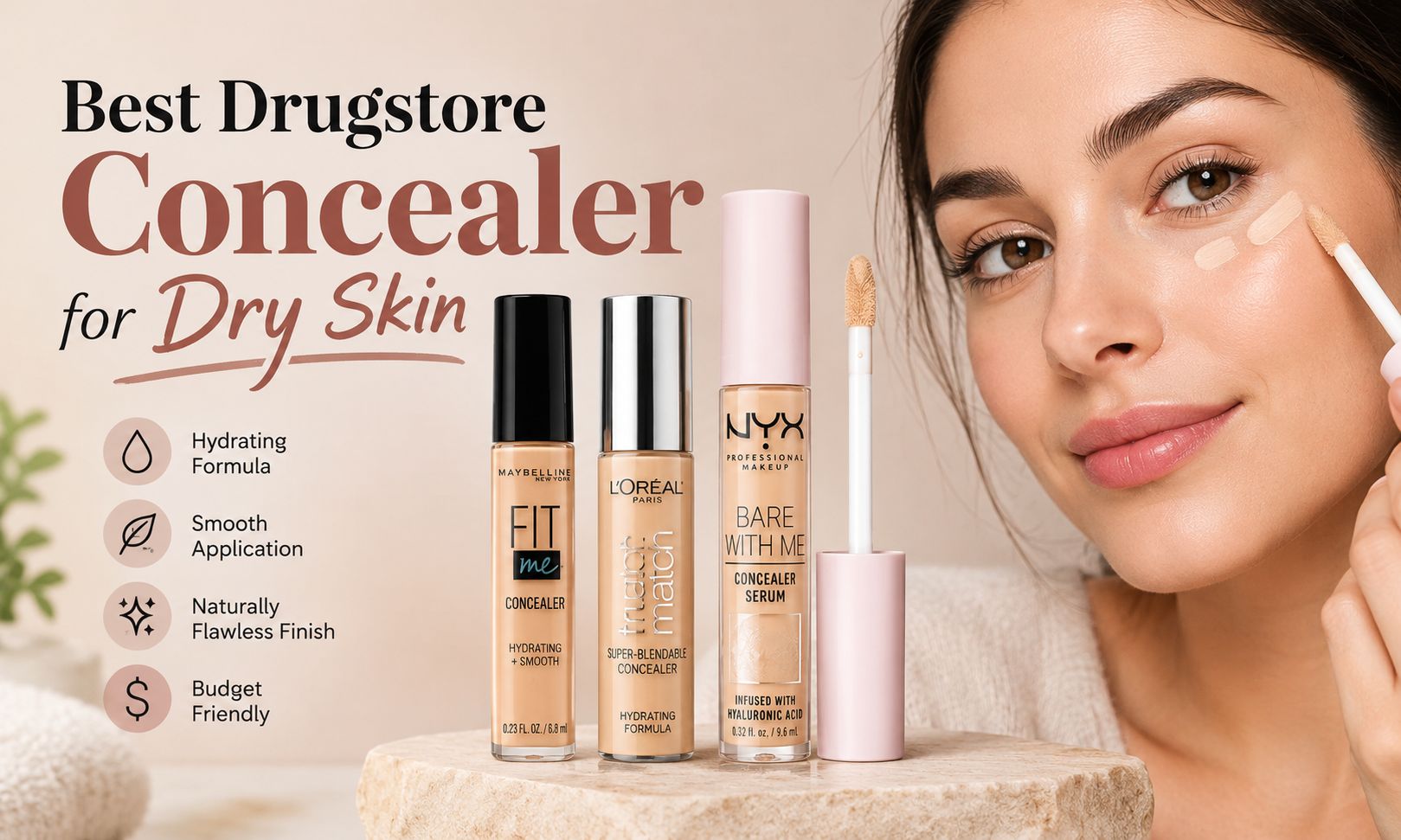
Quick answer: The best drugstore concealer for dry skin is a hydrating liquid or cream formula with a satin finish, because matte and full-powder formulas tend to cling to dry patches and crease. Prep with moisturiser, apply thin layers with a damp sponge, and set only where you need to.
Key takeaways
- Choose liquid or cream concealers with a satin or natural finish over flat matte ones.
- Hydrating ingredients such as glycerin and hyaluronic acid help a formula glide instead of grab.
- Prep matters as much as the product. Moisturise first and let it sink in.
- Thin layers beat one thick layer every time.
- Shade match under natural light, and swatch before you commit.
You can buy the most expensive concealer in the shop and still watch it settle into every fine line by lunchtime if your skin is dry. The reverse is also true. A well-chosen formula from the high street can look soft and seamless when it is applied the right way. This guide explains why concealer misbehaves on dry skin, what to look for on the label, which drugstore options are worth trying and how to put them on so they stay put.
Why does concealer look dry and cakey on dry skin?
Concealer is designed to sit on top of the skin and cover it. When the skin underneath is short on moisture, three things tend to happen.
The skin drinks the product. Dry skin absorbs the liquid part of a formula and leaves the pigment behind, which can look patchy and heavy.
Flakes get highlighted. Matte, high-coverage formulas cling to dry patches and make them more obvious, especially around the nose and the corners of the eyes.
The product moves. The skin under your eyes is thin and constantly in motion. A stiff, long-wear formula cannot flex with it, so it creases.
None of this means you cannot wear concealer. It means you should choose and apply it differently from someone with oily skin.
What should you look for in a concealer for dry skin?
A satin or natural finish
Flat matte finishes are the usual troublemakers. A satin finish has a little slip and light reflection, which makes dry skin look smoother. Avoid anything labelled “ultra matte”, “oil-free” and “24 hour” together, since that combination is built for oily skin.
Hydrating ingredients
Glycerin, hyaluronic acid, squalane and plant oils in the ingredient list suggest the formula is trying to keep the skin comfortable. You will not find these in every product, and ingredient lists change, so check the packaging.
The right coverage for the job
Full coverage is not always the answer. Medium, buildable coverage lets you place product exactly where you need it and keeps the finish thinner. Save high-coverage formulas for blemishes and use a lighter one under the eyes.
The right shade and undertone
A shade that is slightly too light can look dry and grey. For dark circles, many people choose a shade that matches their skin or is one step lighter, then correct colour first if needed. If your circles have a blue or purple cast, our guide on how to use color corrector makeup shows how to neutralise them before concealer.
A comfortable applicator
A doe-foot wand suits spot concealing. A squeeze tube works well for dabbing and blending. A pot is fine if you prefer a brush or fingers. Choose what you will actually use daily.
How were these concealers chosen?
The picks below are based on manufacturer descriptions, widely published shade ranges and the features that help on dry skin. They are not the result of hands-on testing by our team, and formulas, shade ranges and prices change by country and by retailer, so check before you buy. “Drugstore” here means products you can find at pharmacies and supermarkets, which many UK readers call the high street.
What are the best drugstore concealers for dry skin?
Maybelline Instant Age Rewind Eraser: best for dark circles
This is a lightweight liquid in a tube with a soft sponge applicator, and it is aimed at brightening under the eyes. Its soft, fluid texture makes it a good starting point for dry skin because you can dab and blend rather than drag. The thin consistency means it will not hide strong blemishes in one go, so layer lightly or use a second product on spots.
e.l.f. Hydrating Camo Concealer: best budget pick
e.l.f. describes this concealer as hydrating, with hyaluronic acid in the formula, and it is sold at a low price in many markets. It offers fuller coverage than many tube concealers, which makes it a flexible pick if you also want to cover redness or marks. Blend it with a damp sponge, because tapping stops it looking stiff.
L’Oréal Paris True Match Concealer: best for shade choice
True Match has a long reputation for a wide shade range, which matters because a good match reduces the amount of product you need. It is a liquid with a natural finish. If you have very dry skin, apply it over a layer of moisturiser and avoid heavy powder on top.
Maybelline Fit Me Concealer: best everyday option
Fit Me is a widely available liquid with a natural look and a flexible wand. It is popular because it is easy to find and easy to use, though it can feel slightly thinner on very dry skin. A hydrating eye cream underneath helps.
Cream stick or palette concealer: best for targeted coverage
If your problem is a particular patch of redness, a cream stick or small palette gives pinpoint coverage. Warm the product on the back of your hand first so it melts, then press it in. Because these are more pigmented, use very little.
Quick comparison
| Concealer | Format | Coverage | Best for |
| Maybelline Instant Age Rewind | Liquid with sponge tip | Light to medium | Dark circles |
| e.l.f. Hydrating Camo | Liquid | Medium to full | Budget, spots and redness |
| L’Oréal True Match | Liquid | Medium | Wide shade matching |
| Maybelline Fit Me | Liquid | Light to medium | Everyday use |
| Cream stick or palette | Cream | Medium to full | Targeted correction |
Check shade availability where you live, as ranges are not identical across countries.
How do you apply concealer on dry skin?
This is where most of the difference is made.
Step 1: prepare the skin
Cleanse, then apply moisturiser and give it a couple of minutes to sink in. Under the eyes, use a gentle eye cream or a small amount of your regular moisturiser. If you have very sensitive skin, a fragrance-free formula is a sensible choice. Our guide to the best moisturizer for sensitive skin lists several.
Step 2: put your base on first
Apply foundation or tinted moisturiser before concealer. You will often need far less concealer once the base has evened things out. If you are unsure about base makeup for your age or skin, see our guide to the best foundation for mature skin.
Step 3: place, do not paint
Dot a small amount in an upside-down triangle under each eye, starting at the inner corner and sweeping outwards. Add tiny dots to blemishes, around the nose and on the chin if needed.
Step 4: blend with a damp sponge
Press and bounce the sponge over the product rather than sweeping it. Pressing warms the formula and pushes it into the skin, which reduces creasing. A squeezed-out damp sponge is kinder to dry skin than a dry brush.
Step 5: set lightly, if at all
If your concealer creases, apply a tiny amount of finely milled loose powder with a small brush, only on the part of the eye area that moves most. Many people with dry skin can skip setting entirely if the formula is the right one.
Step 6: finish with a mist
A light facial mist or setting spray can soften any powder. Keep it fine and held at a distance, so you do not soak the makeup.
What mistakes make concealer look worse on dry skin?
- Using too much. A thick layer will always crease. Build in thin layers.
- Skipping prep. Concealer cannot replace moisture.
- Setting the whole face with heavy powder. This pulls moisture from the skin and exaggerates fine lines.
- Choosing a shade too light. A lighter shade does not make you look more awake, it can look flat and grey.
- Using dirty tools. Old, product-caked sponges and brushes do not blend well and can irritate. Cleveland Clinic’s dermatologists explain how unwashed tools can harm the skin in this article on makeup and breakouts. Our how-to on cleaning makeup brushes covers the routine.
- Keeping old products too long. Geisinger’s guidance suggests cream makeup and foundation should be replaced within about six months to a year. See their advice on how often to clean brushes and replace products.
How do you stop concealer creasing under the eyes?
A few small changes help most people:
- Use less product and apply it only where the shadow is darkest.
- Wait a minute before blending to let the formula settle, then tap again.
- Avoid concealing right up to the lower lash line, where the skin moves most.
- Smile gently as you blend so you can see where creases form.
- Choose a lighter formula for the eye area than for blemishes.
For wider routines, you may enjoy the quick base techniques in our daily makeup routine and 5 minutes natural makeup tutorial.
Frequently asked questions
What concealer doesn’t crease on dry skin?
Look for a hydrating liquid or cream with a satin finish and medium coverage. Avoid ultra-matte formulas, apply thin layers and blend with a damp sponge. No product is crease-proof on skin that has not been moisturised.
Should I use a liquid or cream concealer on dry skin?
Either can work. Liquids are easier to blend and tend to look more natural under the eyes. Creams offer stronger coverage for blemishes and redness but need careful blending. Many people use a liquid under the eyes and a cream on spots.
Do I need to set concealer on dry skin?
Often not. If your concealer creases or slides, set only the area that moves, using a tiny amount of fine powder. Setting the whole eye area with heavy powder usually makes dryness more obvious.
How do I stop concealers from looking dry under my eyes?
Moisturise first, use less product, blend with a damp sponge and avoid heavy powder. If the skin still looks rough, use a gentle eye cream at night and consider whether dehydration or a skin condition is involved.
What shade of concealer should I choose for dark circles?
Choose a shade close to your skin tone or one step lighter, and test it on your jawline and under your eye in daylight. If your circles are strongly blue or brown, a colour corrector underneath works better than a very light concealer.
The bottom line
The best drugstore concealer for dry skin is one that feels comfortable, matches your tone, and goes on in a thin layer. Start with a hydrating liquid, prepare your skin properly, and blend with a damp sponge. If one product disappoints, try changing your technique before you change your shopping list.