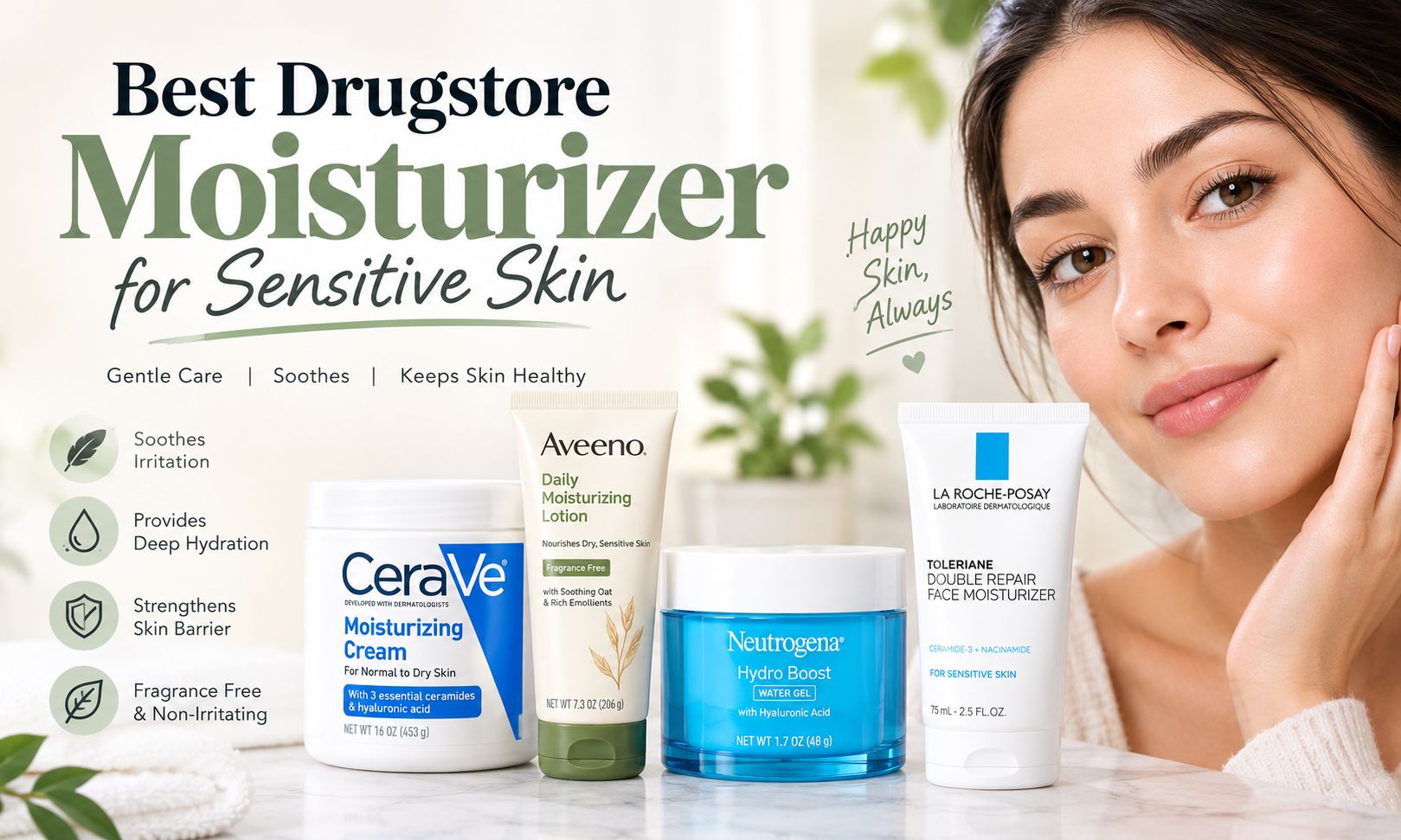
Quick answer: The best moisturizer for sensitive skin is fragrance-free, short on ingredients and rich in barrier-supporting ingredients such as ceramides and glycerin. Look for the National Eczema Association Seal of Acceptance, patch test before using it on your face, and avoid added scent, essential oils, and harsh actives.
Key takeaways
- Fragrance-free matters more than any single “hero” ingredient.
- Ceramides, glycerin, and hyaluronic acid help skin hold on to water.
- A seal such as the National Eczema Association’s is a useful shortcut, not a guarantee.
- Patch test every new product, even gentle ones.
- If your skin stings, burns or flares, see a GP or dermatologist rather than switching products endlessly.
Some people can try any cream on the shelf and walk away unbothered. If your face stings after a new moisturizer, or turns pink within minutes of applying it, you already know you are not one of them. The good news is that sensitive skin usually responds well to a simple approach. This guide explains what to look for, what to leave on the shelf, and which moisturizers are worth a look, so you can stop guessing and start buying with confidence.
What does “sensitive skin” actually mean?
“Sensitive skin” is not a medical diagnosis. It is an everyday label for skin that reacts easily, usually with stinging, tightness, redness, itching, or a burning feeling. Those reactions can be triggered by products, weather, hot water, stress, or simply a change of season.
It helps to separate three situations, because they call for different levels of care:
- Reactive skin. Healthy skin that flares up when it meets certain products or conditions. The cause is often a weakened skin barrier, the thin outer layer that keeps moisture in and irritants out.
- Allergic reactions. A true allergy to a specific ingredient, such as a fragrance or preservative, which tends to cause an itchy rash where the product was applied.
- Skin conditions. Eczema, rosacea and contact dermatitis can all look and feel like “sensitive skin”, but they are conditions that benefit from professional advice.
If you suspect the third group, a moisturizer can support your skin, but it is not a treatment. Your GP or a dermatologist can tell you what is going on and recommend what to use.
What should a moisturizer for sensitive skin contain?
A good moisturizer does three jobs. It draws water into the skin, it softens the surface, and it seals everything in so water does not escape. For sensitive skin, the trick is doing all three without adding anything that irritates.
Ceramides
Ceramides are fats that occur naturally in the skin and help hold the barrier together. Brands that make ceramide moisturizers point out that people with dry or stressed skin often have lower levels of them. Using a cream that contains ceramides is a way of topping the barrier back up.
Glycerin and hyaluronic acid
Both are humectants, which means they attract water. Glycerin is one of the most common and best-tolerated moisturizing ingredients around. Hyaluronic acid does a similar job and is usually well tolerated, though it works best when it is paired with something that seals moisture in.
Soothing and sealing ingredients
Colloidal oatmeal, panthenol and squalane often turn up in formulas designed for irritated skin. Petrolatum and plant butters sit on top of the skin and slow water loss, which is why richer creams tend to feel comforting on dry, sensitive skin.
What should you avoid in a moisturizer for sensitive skin?
You do not need to memorise a long blacklist. A few habits remove most of the risk.
Added fragrance. This is the most common trigger for reactions to skincare. Be aware that “unscented” can mean a masking scent has been added to hide the smell of other ingredients. “Fragrance-free” is the claim to look for.
Essential oils. They sound gentle, but lavender, citrus and peppermint oils are well known for irritating.
Denatured alcohol. Sometimes listed as “alcohol denat.” or “SD alcohol”, it can leave skin feeling tight.
Too many actives in one product. A moisturizer that also contains strong exfoliating acids or retinoids is asking a lot of reactive skin.
Layering too much at once. Even gentle products can add up. If you are building a routine from scratch, our skincare routine for beginners shows how to add one product at a time.
How did we choose these moisturizers?
The shortlist below is based on published ingredient lists, brand information and third-party seals, not on hands-on testing by the Glowing Magazine team. We looked for:
- A fragrance-free formula
- A short, simple ingredient list built around ceramides, glycerin or hyaluronic acid
- Recognition from the National Eczema Association (NEA), which awards its Seal of Acceptance to products it considers suitable for people with eczema or sensitive skin, based on safety and ingredient data (see the NEA’s explanation of the seal)
- A widely available product at a sensible price
Formulas change, and not every country sells the same version of a product. Check the current ingredient list on the packaging before you buy.
What are the best moisturizers for sensitive skin?
CeraVe Moisturizing Cream: best all-rounder
CeraVe’s cream is a thick, rich moisturizer built around three essential ceramides plus hyaluronic acid. The brand states that it is fragrance-free and holds the NEA Seal of Acceptance. It works as a face and body cream, which makes it good value. The honest drawback is the texture. It is dense and can feel heavy on oily or combination skin, so you may prefer it at night.
Vanicream Enhanced Moisturizer: best for avoiding common irritants
Vanicream formulas are known for what they leave out. This one is free from dyes, fragrance, masking fragrance, lanolin and parabens, according to its listings, and it combines glycerin, hyaluronic acid and ceramides. It also carries the NEA seal. It is a lighter lotion than many barrier creams, so it suits normal to dry skin that does not need heavy richness.
Curel Itch Defense Lotion: best for itchy, dry skin
Curel describes this as a fragrance-free lotion with ceramides for dry, itchy skin, and it has been granted the NEA seal. It comes in a pump bottle, which keeps fingers out of the product. It is aimed at body skin as much as the face, so use a small amount on your cheeks first and see how it feels.
Lather Comfort Creme: best for stressed, reactive skin
Lather’s cream is fragrance-free and also holds the NEA seal. Its formula includes oat extract, hyaluronic acid, ceramides and squalane. The brand says it was dermatologist-tested on 150 adults, including 50 with sensitive skin, with no adverse reactions reported under the study conditions. That is a manufacturer claim rather than independent proof, but it is more information than most brands give. It sits at the higher end of the price range.
Quick comparison
| Moisturizer | Texture | Key ingredients | Best for |
| CeraVe Moisturizing Cream | Thick cream | Ceramides, hyaluronic acid | Very dry skin, night use |
| Vanicream Enhanced Moisturizer | Light to medium lotion | Glycerin, ceramides, hyaluronic acid | Avoiding common irritants |
| Curel Itch Defense Lotion | Lotion | Ceramides | Dry, itchy skin |
| Lather Comfort Creme | Cream | Ceramides, squalane, oat extract | Stressed, reactive skin |
Which type of moisturizer suits your sensitive skin?
The right product depends as much on your skin type as on its sensitivity.
- Dry and sensitive: Choose a cream or balm with ceramides and a sealing ingredient such as petrolatum or squalane. Apply while your skin is slightly damp.
- Oily or combination and sensitive: Look for a gel-cream or lotion labelled non-comedogenic, which means it is formulated not to block pores. You still need moisture, because oily skin can be dehydrated too.
- Red and easily flushed: Keep the routine as short as possible and avoid hot water, scrubs and anything that tingles. Speak to a doctor if the redness is persistent, since it can have medical causes.
- Need sun protection too: A separate sunscreen is more dependable than a moisturizer with SPF, because most people apply moisturizer too thinly to get the protection printed on the label. Our guide to the best lightweight sunscreen for face covers options that sit comfortably on reactive skin.
How do you patch test a new moisturizer?
Patch testing takes two minutes of effort and several days of patience, and it can save you from a reaction across your whole face.
- Wash and dry your hands and the test area. The inner forearm or the skin just behind your ear works well.
- Apply a small amount of the product, about the size of a pea spread thinly.
- Leave it alone. Do not wash it off unless it stings or itches.
- Check the area after 24 hours, then for several days. Redness, bumps, itching or swelling mean the product is not for you.
- If nothing happens, try the product on a small part of your face, such as the jawline, before using it everywhere.
Rinse it off straight away and stop using it if you feel burning at any point.
How should you apply moisturizer to sensitive skin?
Technique matters almost as much as the product.
- Use lukewarm water. Hot water strips oils and makes sensitive skin feel tight.
- Pat, do not rub. Dab your face dry with a soft towel and leave it slightly damp.
- Moisturise within a few minutes. This helps trap the water that is already on your skin.
- Smooth it on gently. Use light, upward strokes with clean fingers rather than tugging at the skin.
- Use the right amount. A pea-sized to two-finger-length amount is usually enough for the face, depending on the product. Too little will not do much, and too much can leave a film.
What mistakes make sensitive skin worse?
- Changing products constantly. If you swap your moisturizer every week, you will never know what works. Give a new product at least a few weeks unless it causes a reaction.
- Treating tingling as a sign it is working. Stinging is a warning, not proof of results.
- Ignoring your wider environment. Central heating, long hot showers and cold wind all dry skin out. Our post on skincare tips in dry season has simple habits to try.
Book an appointment with your GP or a dermatologist if your skin keeps flaring despite simple products, if you develop a rash that spreads or weeps, if you have swelling or intense itching, or if you suspect eczema, rosacea or an allergy. A professional can offer patch testing and, where needed, treatments that no moisturizer can replace.
Frequently asked questions
What is the best moisturizer for very sensitive skin?
Choose a fragrance-free cream with a short ingredient list built around ceramides and glycerin, ideally one with a third-party seal such as the NEA’s. Patch test it first and introduce it on its own, rather than alongside other new products.
Is fragrance-free the same as unscented?
Not always. “Unscented” can mean the product has no noticeable smell, but a masking fragrance may have been added to cover the natural smell of the ingredients. “Fragrance-free” means no fragrance has been added, so it is the safer phrase for reactive skin.
Can I use a body lotion on my face?
Sometimes. Some products, such as CeraVe Moisturizing Cream, are marketed for both. Others are richer or contain ingredients that suit the body better than the face. Check the label and patch test on a small area first.
How do I know if a moisturizer is irritating my skin?
Stinging, burning, new redness, itching, small bumps or tightness shortly after applying are common signs. Stop using the product and rinse it off if you notice any of them. If the reaction is strong or does not settle, seek medical advice.
Should sensitive skin use a moisturizer with SPF?
A daily sunscreen is still important, but a moisturizer with SPF is not always the best way to get it. Many people do not apply enough moisturizer to reach the stated SPF. A separate sunscreen that is gentle on your skin is usually more reliable.
The bottom line
Sensitive skin does not need a complicated routine or an expensive jar. It needs a moisturizer that is fragrance-free, simple and built around ingredients that support the barrier, introduced slowly and tested carefully. Start with one of the options above, give it a fair trial, and pay attention to how your skin responds. If it never settles, that is useful information too, and a good reason to ask a professional.