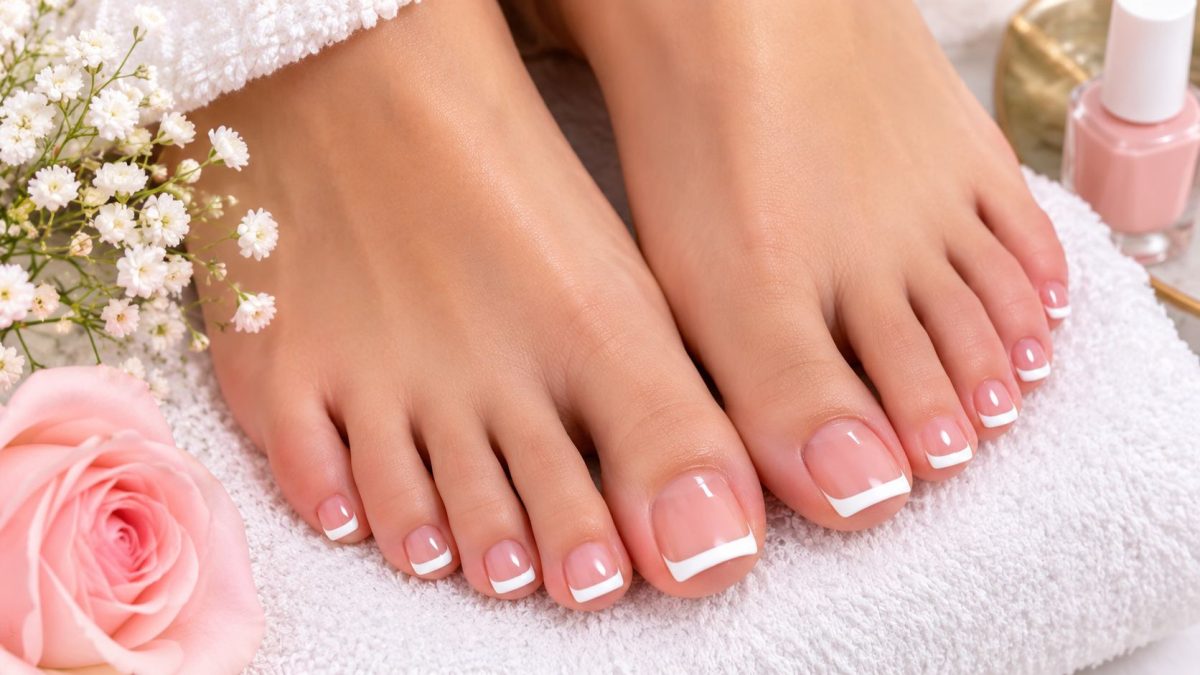
You have a beach trip coming up, or a wedding, or just a pair of sandals that deserve better. You want your feet to look neat without looking like you spent the whole afternoon on them. That is usually the moment french tip toes come to mind.
They are clean, flattering, and surprisingly flexible. A soft pink base with a crisp white edge is the classic, but the idea has stretched far beyond that, with colored tips, thin lines, glitter edges, and shapes that suit almost any outfit.
This guide covers what a french pedicure is, the styles worth trying, how to do it at home, how to make it last, and the mistakes that make it look uneven.
The Short Answer: What Are French Tip Toes?
French tip toes are a pedicure style where the toenail has a sheer pink, beige, or nude base with a contrasting color painted along the free edge, the tip. The traditional version uses white tips, but modern versions use any color you like.
The design works because it mimics a naturally healthy, well-kept nail. The base color evens out the nail, and the tip adds definition. It looks polished with very little effort, which is why it has stayed popular for decades.
Quick snapshot
- Base color: sheer pink, peach, beige, or clear
- Tip color: classic white, or any shade
- Best for: weddings, vacations, sandals, everyday wear
- Difficulty: beginner to intermediate at home
A Quick Note on Where the Style Comes From
The French manicure is widely credited to Jeff Pink, the founder of ORLY, who developed it in the 1970s for use in Hollywood film and fashion shoots, where performers needed nails that looked good with many outfits. The name stuck even though the style did not begin in France. The pedicure version followed naturally.
Why French Tip Toes Keep Coming Back
Trends in nail care come and go, but this one keeps returning. A few reasons explain it.
- It suits almost everyone. The base and tip colors can be adjusted to flatter different skin tones.
- It works with any outfit. Neutral bases do not clash with clothing.
- It looks clean. The contrasting tip frames the nail without crowding it.
- It grows out gracefully. Because toenails grow slowly, a french pedicure often lasts well beyond a typical manicure.
Popular French Tip Toe Styles to Try
If you think french tips mean one look, here is a wider menu.
Classic White
The traditional choice. Soft pink base, crisp white tip. It is timeless and goes with everything from white sandals to bold summer dresses.
Micro French
A very thin line of color along the edge. This is a good option for short nails or anyone who finds a thick white tip too stark. It looks delicate and modern.
Colored French Tips
Swap the white for red, blue, green, lavender, or coral. A colored tip is playful and works well for vacations and festivals. Pastel shades suit spring and summer, while deeper tones such as burgundy or navy suit autumn and winter.
Double French
Two lines of color, one at the tip and another slightly above. It adds a little drama without feeling heavy.
Reverse French
The color sits at the base of the nail near the cuticle instead of at the tip. It is unusual and stylish, though it needs a steady hand.
Glitter or Chrome Tips
A shimmering edge in gold, silver, or iridescent powder gives a dressy feel that suits evenings and special occasions.
Negative Space French
Parts of the nail are left bare, with only a thin tip line painted on. It feels modern and lightweight.
How to Choose the Right Colors for Your Skin Tone
There are no hard rules, but a few general guidelines help.
- Cooler undertones often look good with soft pink or cool-toned sheer bases and bright white tips.
- Warmer undertones tend to suit peach, beige, or creamy bases with soft white or ivory tips.
- Deeper skin tones can look striking with sheer rose or warm brown bases paired with white, gold, or bold color tips.
A quick tip: if stark white feels too harsh, try an off-white, cream, or soft ivory. It keeps the french look but blends more gently with your skin.
How to Do French Tip Toes at Home
A french pedicure is easier than it looks, but patience matters. Here is a step-by-step approach.
What You Will Need
- Nail polish remover and cotton pads
- A nail file and nail clippers
- Cuticle pusher or orangewood stick
- Toe separators
- Base coat and top coat
- Sheer pink or nude polish
- White (or colored) polish with a thin brush
- Optional: tip guide stickers or a small detail brush
Step-by-Step
- Prep and soak. Wash your feet and soak them in warm water for several minutes to soften skin and cuticles.
- Trim and shape. Cut toenails straight across rather than curving the corners, which helps reduce the risk of ingrown nails. File gently to smooth the edge.
- Push back cuticles. Use a gentle tool and avoid cutting living skin.
- Wipe the nail clean. Remove oils with polish remover so color sticks properly.
- Insert toe separators. This keeps wet polish from smudging.
- Apply a base coat. It protects the nail and helps polish last.
- Add the sheer color. Use one or two thin coats of pink, peach, or nude polish. Let each coat dry.
- Paint the tips. Use a thin brush or a guide sticker. Draw a gentle line along the free edge, following the natural curve of the nail.
- Clean up edges. Use a small brush dipped in remover to fix mistakes.
- Seal with top coat. Apply a thin layer over the whole nail to protect the design and add shine.
Tips for Cleaner Tips
- Use thin coats. White polish can streak if applied too heavily.
- Steady your hand. Rest your elbow on your knee or a table.
- Practice on one nail first. It is easier to adjust before you commit.
- Try tip guides. They make straight or curved lines much easier for beginners.
Salon French Pedicure or DIY?
Both have advantages.
Salon pedicure
- Cleaner lines and professional tools
- Gel or other long-lasting finishes available
- Less time and effort on your part
DIY pedicure
- Lower cost
- Flexibility to redo whenever you like
- A chance to experiment with colors
If you go to a salon, look for one that clearly cleans and sterilizes its tools between customers. Hygiene matters more than any design.
Gel, Regular Polish, or Dip Powder?
The finish you choose affects durability and care.
- Regular polish is easiest to apply and remove, but may chip sooner.
- Gel polish needs a lamp to cure and lasts longer, though it should be removed carefully to avoid damaging the nail.
- Dip powder or acrylic overlays are more durable but usually require professional application and careful removal.
Toenails also grow more slowly than fingernails, so any finish tends to look fresh longer on toes than on hands.
How to Make French Tip Toes Last
A little care goes a long way.
- Apply top coat every few days. It refreshes shine and protects the tip.
- Moisturize your feet and cuticles. Dry skin around the nail makes any pedicure look worn.
- Protect your feet. Wear sandals or shoes at pools, gyms, and shared spaces.
- Avoid using nails as tools. Prying or scraping can chip polish.
- Wear gloves when cleaning. Harsh chemicals can dull or lift polish.
- Remove old polish properly. Use a gentle remover and avoid scraping.
Common Mistakes to Avoid
Even a simple design can go wrong in predictable ways.
- Painting tips too thick. Heavy white looks chalky and chips faster.
- Skipping the base coat. Polish may stain the nail and wear off sooner.
- Rushing dry time. Smudged tips are the most common problem.
- Using the wrong base shade. A base that is too light or too dark can look unnatural.
- Ignoring nail shape. A very curved tip on a square nail looks off. Match the tip line to the natural shape.
- Painting over damaged or infected nails. If you notice discoloration, thickening, or pain, see a healthcare professional before covering the nail.
When to Be Extra Careful
People with certain health conditions, including diabetes or circulation problems, should take extra care with pedicures. Cuts and infections can heal slowly, so a professional’s advice is worth getting before any treatment. If you notice redness, swelling, or persistent pain around a toenail, avoid polish and get it checked.
Styling Ideas: What to Wear With French Tip Toes
The look is adaptable.
- With sandals: Classic white tips look crisp against tan, black, or metallic straps.
- With summer dresses: Colored tips can echo a color in the print.
- For weddings: Soft pink with ivory or champagne tips feels elegant.
- For vacations: Bright tips in coral, turquoise, or lime match a travel mood.
- For winter: Try deeper tones like burgundy or navy with a nude base.
If you enjoy browsing looks like these, you will find more fashion and beauty ideas on our site.
Frequently Asked Questions
What are french tip toes?
They are a pedicure style with a sheer pink or nude base and a contrasting color painted on the tip of the nail. The classic version uses white, but colored versions are common.
Can I do a french pedicure at home?
Yes. With a nude base polish, a thin brush or tip guides, and patience, most beginners can get a neat result. Practice on one nail first and use thin coats.
How long do french tip toes last?
It depends on the finish and your daily habits. Regular polish may last a couple of weeks, while gel or dip finishes often last longer. Toenails grow slowly, which helps pedicures stay fresh.
What color base works best for a french pedicure?
Sheer pink, peach, beige, or milky nude are the most popular. Choose a shade close to your natural nail color or one that flatters your skin tone.
Are french tip toes good for short nails?
Yes. A micro french with a very thin tip line works especially well on short nails and looks neat and modern.