An everyday lipstick has an odd job. It has to look good on a Monday morning with no mirror, on a Friday evening with a bit more effort, and everywhere in between. It shouldn’t need constant checking, shouldn’t dry your lips and shouldn’t make you feel dressed up.
This guide doesn’t give you a ranked list of products, because shade names and stock vary too widely. Instead, it helps you choose by undertone and depth, then gives you a small wardrobe of shade types to build from. Think of it as a way to shop smart, not a fixed shopping list.
Start with your undertone
Your undertone is the subtle colour beneath your skin’s surface, which stays the same even if your tan changes.
Warm undertone: golden, peachy or yellow. Your veins look green, gold jewellery often suits you and you tan easily.
Cool undertone: pink, red or blue. Your veins look blue or purple, silver jewellery suits you and you burn more easily.
Neutral undertone: a mix, so both gold and silver look fine.
If you aren’t sure, try this: hold a plain white piece of paper next to your face in daylight. If your skin looks yellow or golden next to it, you’re probably warm. If it looks pink or rosy, you’re cool. If it’s hard to say, you’re probably neutral.
Lipstick shades by undertone
Warm: peach, coral, terracotta, warm brown, brick, tomato red.
Cool: rose pink, mauve, berry, raspberry, cool plum, blue-toned red.
Neutral: dusty rose, soft red, mid-tone berry, muted pink-brown.
These are guides, not laws. Plenty of people wear shades outside their usual group.
Everyday shades by depth
Depth matters as much as undertone. A pale rose that looks fresh on light skin can vanish on deeper skin, and a rich plum that’s gorgeous on deep skin can look heavy on very fair skin.
Fair to light skin
Soft pinks, peachy corals and rosy beiges look natural. Raspberry and warm red can add colour without looking harsh. Avoid very pale nudes, which can wash out the face.
Everyday picks: rose pink, soft coral, berry stain, light mauve.
Light to medium skin
You can wear most colours. Dusty rose, warm pink, apricot coral and muted berry all look good. A soft brick adds warmth for autumn.
Everyday picks: dusty rose, peach-pink, soft brick, muted berry.
Medium to olive skin
Warm berries, terracotta, brick and rosy browns are flattering. A mid-tone mauve can look sophisticated. If you’ve been tempted by a nude, our guide to nude lipstick shows how to choose one that suits olive and golden skin.
Everyday picks: terracotta, rosy brown, warm berry, soft red.
Tan to deep skin
Rich shades show up beautifully: plum, wine, deep berry, chocolate brown, warm brick and deep rose. Coral and bright pink can look lively, while very pale pinks can look chalky.
Everyday picks: plum-rose, chocolate brown, deep berry, brick red.
Very deep skin
Deep, saturated colours often look best: dark plum, burgundy, rich brown, deep berry and true red. Look for formulas with strong pigment that don’t need building.
Everyday picks: burgundy, dark plum, warm brown, bright red.
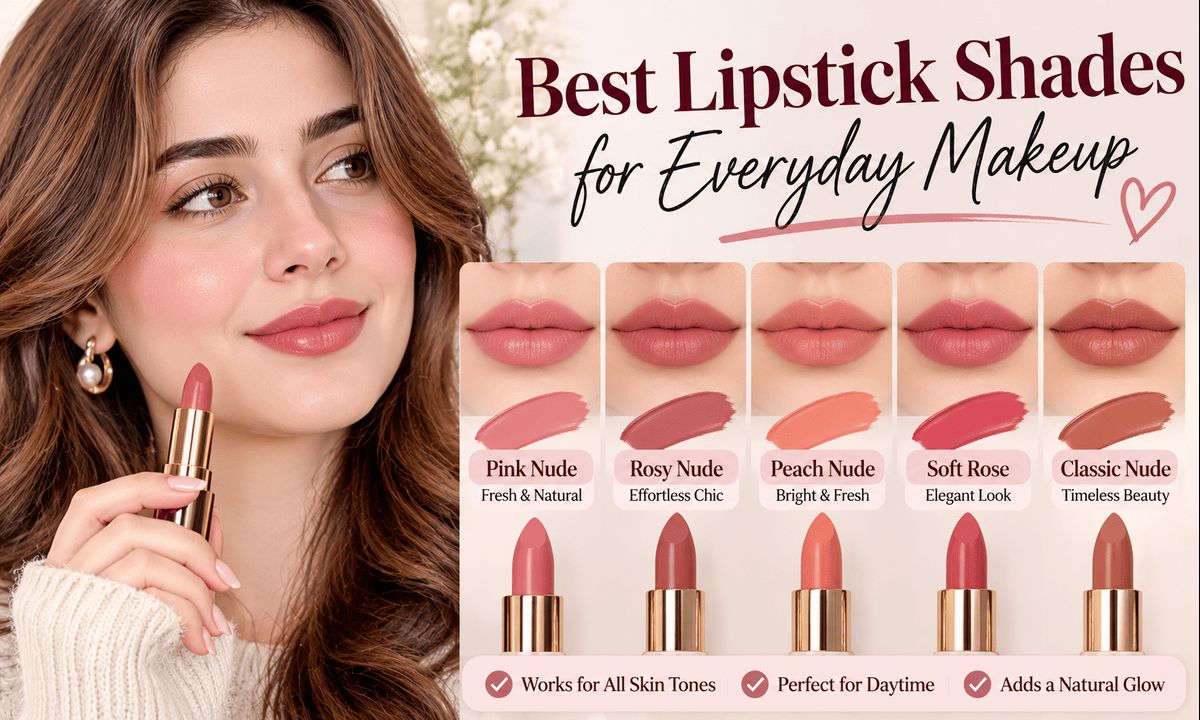
The five everyday shade families
Instead of chasing individual shades, learn the families. Most people only need one or two from each of a few.
1. Rose and dusty pink
The most universal. A muted rose looks like your lips, only healthier. It goes with every eye colour and almost every outfit.
Best for: work, daytime, every skin tone with the right depth.
2. Soft coral and peach
Warm, fresh and cheerful. Coral brightens the face and suits warm and neutral undertones. It looks great in spring and summer.
Best for: weekends, holidays, tan skin.
3. Berry and mauve
A step more definite. Berry gives the lips a stained, grown-up look. Choose a sheer or satin formula for day and a richer one for evening.
Best for: autumn and winter, evenings, medium to deep skin.
4. Brick, terracotta and brown
These earthy shades are popular and flattering. They work with warm makeup and neutral outfits, and they’re good with copper hair and other warm hair colours.
Best for: autumn, warm undertones, a modern, relaxed look.
5. Soft red
A red that isn’t too bright, such as a brick-red or a blue-red stain. It’s not an everyday shade for everyone, but a sheer red can look easy and chic. Blot it so it looks like a stain.
Best for: evenings, weekends, anyone who likes a bolder lip.
The four-shade everyday wardrobe
If you want to simplify, build a small collection.
- A your-lips-but-better shade: rose, peach-pink or brown-pink. This is your default.
- A warm, fresh shade: coral, apricot or light terracotta for days when you want brightness.
- A deeper shade: berry, plum or brick for evenings and colder months.
- A tinted balm or stain: for days you want the lightest touch.
That’s enough for almost every occasion.
Choose the finish
The formula matters as much as the colour.
Cream: comfortable and easy to apply. Looks natural, with a soft shine. A good everyday choice.
Satin: between cream and matte, with a gentle sheen. Looks polished and lasts well.
Matte: long-lasting and modern, but can be drying. Use a balm underneath and avoid it on very dry lips.
Sheer or tinted: a light wash of colour. Forgiving and quick, but fades faster.
Gloss or glaze: shiny and flattering, but short-lived. Good over lipstick for a fuller look.
Liquid lipstick: can last longer, but some are drying. Test on your lips and check the comfort after an hour.
For daily wear, cream and satin are usually the safest bets.
How to wear everyday lipstick
At work
Choose a shade you’re comfortable with and that won’t need constant touch-ups. A satin rose, soft berry or muted brick works well. Blot after applying so it doesn’t transfer on cups.
On weekends
Go for a tinted balm, a sheer coral or a light stain. Apply with a fingertip for a soft, casual effect.
In the evening
Use a deeper shade or add a second coat. Define the edges with a matching lip liner.
With glasses
A little more colour helps balance frames. Soft berry and rose both suit most glasses.
With a bare face
If you wear little else, a soft rose or coral is enough to look put together. Add a swipe of mascara and brow gel.
How to apply for a natural finish
- Prep. Use a lip balm for a few minutes, then blot any excess. If your lips are flaky, exfoliate gently with a soft cloth.
- Apply. Use the bullet or a lip brush. For a softer look, dab with a fingertip.
- Blot. Press a tissue between your lips.
- Reapply lightly. A second thin layer helps the colour last without looking heavy.
- Tidy the edges. Use a cotton bud or a small brush with concealer to clean the line.
Lip liner helps with definition and longevity. Choose one close to your lip colour, or one that matches your lipstick.
How to make lipstick last
- Start with a balm that has absorbed fully.
- Apply liner all over the lips as a base.
- Blot between coats.
- Press a tiny amount of translucent powder through a tissue over the lips, if your lipstick is creamy.
- Eat carefully. Oily foods break down colour faster.
- Carry a mirror and a small lipstick or balm for touch-ups.
Common mistakes
Choosing a shade that’s too pale. It can wash out the face, especially in photos.
Ignoring undertone. A cool pink on warm skin can look dull, and a warm coral on cool skin can look orange.
Skipping lip care. Any lipstick looks better on soft lips.
Wearing too many colours at once. If your lips are bold, keep blush and eyes simple.
Buying online without checking. Swatches on screen can be misleading. Look at real-life reviews or try in store.
Never trying anything new. If a shade looks wrong in the tube, test it on your lips. Sometimes the best colours look odd until they’re on.
How to test a shade in a shop or at home
A swatch on your hand tells you very little, because the skin on your hand is a different colour from your lips. Instead, try these.
Test on your lips. If you can’t, dab a little on the pad of your finger, where the colour is closer to lip tone.
Use daylight. Shop lighting can make everything look pinker or yellower. Step to a window or the doorway if you can.
Wait a few minutes. Some formulas shift as they warm up and settle. A brown-nude can turn pinker, and a coral can turn more orange.
Look at the whole face. A shade should make your skin look healthy, not tired. If your teeth look yellower or your skin looks sallow, try a version with a bit more blue or pink in it.
Check it against your usual clothes. Colours you wear most should work with your lipstick, not fight it.
Ask about returns. If you’re buying online, check the return policy before you open it.
Matching lipstick to the rest of your makeup
An everyday lip works best when the rest of your face agrees with it. If your lipstick is rosy, a pink or peach blush ties it together. If it’s brick or terracotta, a warm bronzer and a soft brown eyeliner make sense. A berry lip looks good with a neutral eye and a hint of mascara.
If you wear a lot of makeup, choose a quieter lip. If you wear almost none, a stronger lip does the work of the whole look. It’s one of the simplest balancing tricks in makeup.
Frequently asked questions
What are the best lipstick shades for everyday makeup?
Rose pink, peachy coral, muted berry, warm brown-nude and soft brick suit most people. Choose a shade close to your natural lip colour but a little deeper, and pick the tone by your undertone: peach and coral for warm skin, rose and berry for cool.
How do I choose a lipstick for my skin tone?
Check your undertone first, then think about depth. Warm skin suits peach, coral and terracotta. Cool skin suits rose, berry and mauve. Deeper skin looks rich in plum, brick and chocolate. Try shades in daylight before you buy.
Which lipstick finish is best for daily wear?
Cream and satin are the most comfortable and look natural. Matte lasts longer but can be drying, so use a balm underneath. Sheer and tinted formulas are the lightest option for casual days.
How many lipsticks do I need?
Three or four cover most needs: a your-lips-but-better shade, a warm shade, a deeper shade for evenings and a tinted balm. Add more only if you wear them.
Can I wear bright lipstick every day?
Yes, if you like it. Choose a comfortable formula, blot it for a softer effect and keep the rest of your makeup simple. A sheer or stain version feels easier for daily wear.