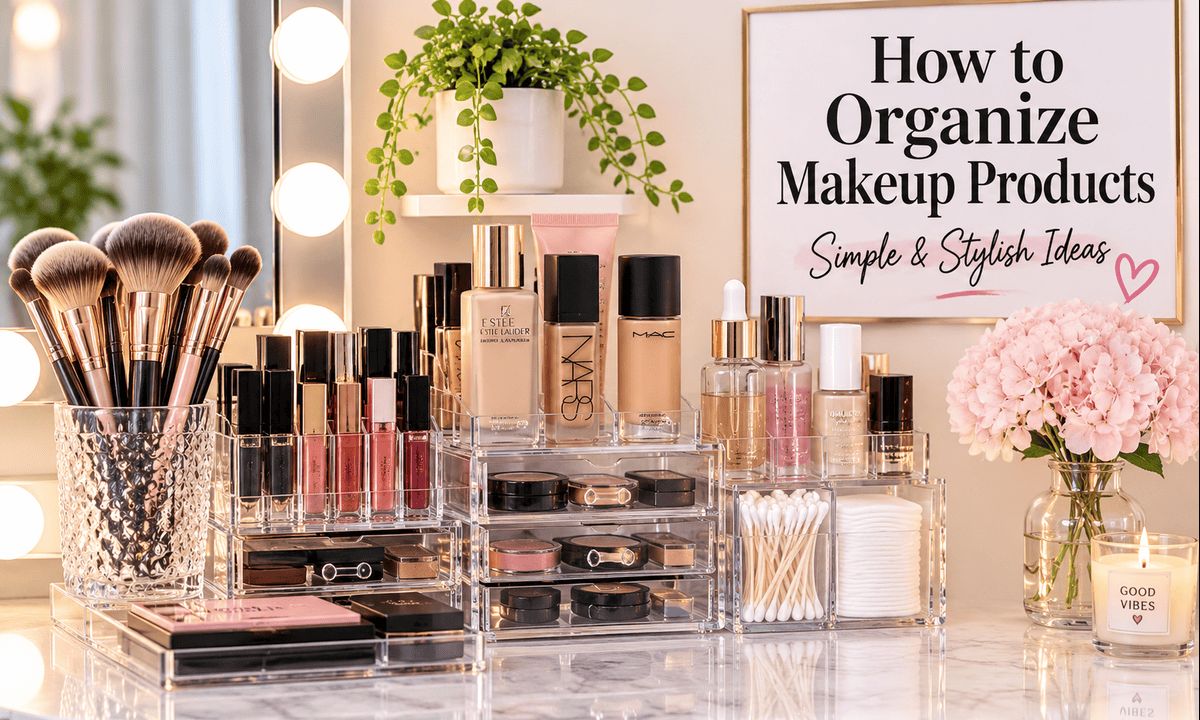
Most people don’t have a makeup storage problem. They have a makeup pile problem. Products arrive as gifts, impulse buys and half-finished experiments, then settle in a bag, a drawer and the bottom of a handbag until no one knows what’s where.
The good news is that organising it takes about an hour and a few simple rules. This is the process I’d walk a friend through, step by step, followed by storage ideas for different spaces. You don’t need to spend much. Many people find they need less storage once they’ve cleared the clutter.
Step 1: Take everything out
Empty every drawer, bag and box onto a clean table or bed. This is the part that feels dramatic and slightly shocking. Seeing it all in one place shows you duplicates, forgotten favourites and things that have been hiding.
Wipe down the empty containers with a damp cloth. It’s a good moment to clean them before anything goes back.
Step 2: Sort into keep, check and let go
Make three piles.
Keep: products you use and like, and that are in good condition.
Check: things you’re unsure about. Look at the expiry symbol on the pack, which looks like an open jar with several months, such as 12M. This tells you how long the product is intended to last after opening.
Let go: anything that’s dried out, smells odd, has separated, has changed colour, or that you’ve never used. Also anything contaminated, such as a broken eyeshadow that has been dropped into something messy.
A few guidelines on shelf life, which vary by product and brand:
- Mascara and liquid eyeliner: replace every few months, because they’re used near the eyes and can harbour bacteria.
- Foundation and concealer: usually around a year, depending on the formula.
- Lipstick: often one to two years if kept clean and cool.
- Powders: often longer, but replace if they smell off or change texture.
- Brushes and sponges: clean regularly and replace if bristles shed or sponges crumble.
If a product has caused irritation or an odd reaction, don’t keep it. If you have an eye infection, throw away anything that touched your eyes.
If you aren’t sure whether to keep something, ask: Have I used this in the last six months? Do I like how it looks on me? If the answer is no to both, let it go. Many people donate unopened products to friends or recycling schemes, but never pass on opened eye or lip products.
Step 3: Group by type
Put the keep pile into groups. This is the foundation of any good system.
- Face: primer, foundation, concealer, powder, bronzer, blush, highlighter.
- Eyes: eyeshadow palettes, eyeliners, mascara, brow products.
- Lips: lipsticks, glosses, liners, balms.
- Tools: brushes, sponges, tweezers, curlers.
- Skincare crossovers: setting spray, makeup remover, moisturiser, SPF.
- Extras: nail polish, fragrance, hair accessories, if they share the space.
Some people prefer to group by routine instead: “everyday”, “going out” and “travel”. Try both and see which feels more natural. A mix often works best, with an everyday kit in front and other groups behind.
Step 4: Decide what you use every day
This is the step that makes the biggest difference to how your system feels. Pull out the products you reach for most days. For many people, that’s a base product, concealer, blush, brow product, mascara and a lip colour. That’s your daily edit.
Place this edit where you can reach it with one hand: a tray on a dressing table, the top drawer in the bathroom or a small organiser on the shelf. Everything else goes in a second tier.
If you enjoy trying new looks, keep a small “play” box for products you like to experiment with. When it’s full, something has to go.
Step 5: Choose storage that fits what you have
Before you buy anything, measure your space and count your products. Then choose storage based on how you use each category.
Drawer organisers
Shallow, adjustable dividers are ideal for drawers. They keep products from sliding around and let you see everything at once. Use small compartments for lipsticks and eyeliners, and wider ones for palettes and compacts.
Lay flat products on their sides or stack palettes with the colours facing up.
Acrylic and tiered trays
Clear trays let you see what you have and take up little room. A tiered tray on a dressing table is useful for lipsticks and glosses. Choose one with a stable base.
Brush holders
Keep brushes upright, bristles up, in a cup, jar or holder. Standing them upright helps them keep their shape and lets them air-dry. Group them by purpose: face, eyes, lips.
Palette storage
Eyeshadow palettes are thin and stack neatly. Store them upright like books, with the label facing out. If you love blending, keep your favourite eyeshadow palettes and brushes together in a shallow drawer.
Lipstick holders
Use a tray with slots, a tiered stand or a drawer insert with small holes. Store lipsticks upright, with the shade visible on the base or the top, so you can pick quickly. If you wear a lot of different colours, our list of everyday lipstick shades can help you decide which ones deserve front-row space.
Cosmetic bags and pouches
Use them for travel and daily carry. One small pouch per kit works well: one for face, one for eyes and lips. Choose washable fabrics.
Boxes and baskets
Good for bulky items and backup supplies. Label the outside with what’s inside, such as “spare skincare” or “travel minis”.
Wall and door storage
If space is limited, hanging pockets, over-the-door organisers and floating shelves keep things off surfaces. Don’t store makeup on a bathroom window sill, where heat and sunlight can ruin it.
Step 6: Put it all back, with a plan
Now return your products using these simple rules.
- Daily items at the front or top.
- Similar items together. All lipsticks in one place, all palettes in one place.
- Tall items at the back, short items at the front if you use open shelves.
- Heavier items low, lighter items higher.
- Leave a little space. If every slot is full, you’ll struggle to keep it tidy.
- Label drawers and boxes if you share the space or like a clear system.
Take a photo of the finished layout. It helps you put things back and shows you where you drift.
Where to store makeup
The location matters as much as the organiser.
Best: a cool, dry place away from direct sunlight, such as a bedroom drawer or dressing table.
Fine for short-term use: a bathroom cabinet, as long as it doesn’t get very hot and humid. Steam and heat can break down formulas and encourage bacteria.
Avoid: a hot car, a sunny window sill or a damp shower shelf.
If your bathroom is the only option, keep products in closed containers and take out only what you need for the day.
Storage ideas for different situations
If you have a tiny space
Use one drawer or one box. Keep a small edit of products, and use a compact organiser that fits one palette per slot. Vertical storage, such as stackable trays or a wall-mounted shelf, saves floor and table space.
If you have a big collection
Divide into categories and rotate. Keep the current season’s products in front, and store the rest in labelled boxes. Consider whether you need duplicates.
If you share a bathroom
Keep a personal caddy with your daily items that you can carry in and out. It prevents clutter and keeps your products clean and separate.
If you travel often
Build a travel kit with mini versions of your essentials, packed in a clear pouch. Keep it stocked so you don’t have to repack each time.
If you do other people’s makeup
Use a professional case or a multi-tray box with separate compartments. Clean tools between clients and keep a labelled system for products that are shared.
Keep it tidy: a simple routine
A system only works if you maintain it.
- Daily: put things back after use. Wipe your tray if powder has fallen.
- Weekly: wipe down surfaces and check that lids are closed.
- Monthly: quickly scan for products you no longer use.
- Every three months: do a short declutter and check expiry dates.
- Every six months: clean your organisers and wash your brushes properly.
Wash brushes with gentle shampoo or brush cleanser, rinse well, reshape the bristles and let them dry flat or hanging, with the bristles down at an angle so water doesn’t run into the handle.
Mistakes to avoid
Buying storage first. You’ll end up with a container that doesn’t fit what you own.
Storing everything on show. Dust, light and heat can damage products and make it harder to keep clean.
Hiding everything away. If you can’t see it, you won’t use it.
Keeping duplicates “just in case”. Decide on a limit, such as one backup per essential.
Forgetting to clean the container. Dust and residue build up quickly in drawers and brush pots.
Keeping broken or crumbly products. They’re messy and hard to use.
A 30-minute version for busy people
If a full sort feels like too much, do it in three short rounds. In the first ten minutes, bin anything obviously finished, dried out or broken. In the second, pull out the ten things you actually wore this month and put them in one tray. In the third, put everything else in a single box or drawer and label it.
You can come back and refine the system later. A rough version that you keep up beats a perfect one you never finish. After a week, you’ll know which products you reach for and which ones never leave the box. Those are the ones to question next time.
Organising by budget
You don’t need to buy anything to start. Jars, mugs and cutlery trays work well for brushes, pencils and small items. Shoe boxes make good drawer dividers once they’re cut down to size.
If you do want to spend a little, the best value is usually a drawer divider set and one clear tray for daily items. Larger units with lots of compartments often look great in photos but end up half empty. Buy for the collection you have now, not the one you imagine owning.
Frequently asked questions
What is the best way to organize makeup products?
Take everything out, discard anything expired or unused and group the rest by type. Keep daily items within easy reach and store the rest in drawers or boxes with dividers. Make sure everything has a place and check it every few months.
How should I store lipsticks?
Store them upright in a tray, drawer insert or tiered stand with the shade visible. Keep them in a cool, dry place away from sunlight so they don’t melt or change texture.
How often should I declutter my makeup?
A quick check every three months works well, with a deeper clear-out once or twice a year. Replace mascara and eye products more often, and throw away anything that smells strange or changes texture.
Is it okay to keep makeup in the bathroom?
It’s fine if the room is cool and dry, but heat and humidity can shorten the life of products. A bedroom drawer or dressing table is usually a better choice, especially for powders and lipsticks.
How do I organize makeup in a small space?
Use a single drawer or a small box with dividers. Keep only your daily edit on show, store the rest in a labelled container and use vertical or wall-mounted storage to save room.