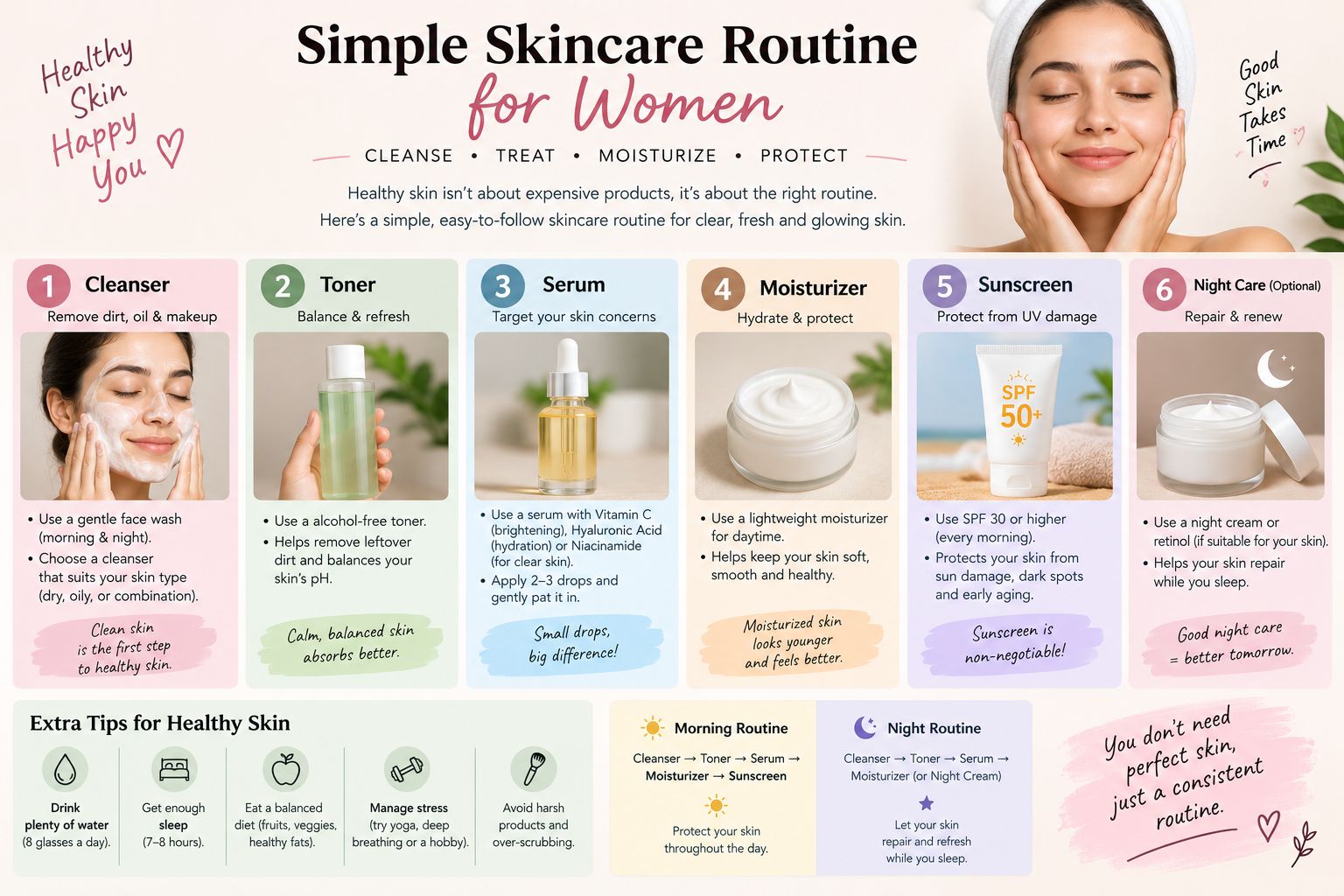
Quick answer: A simple skincare routine for women has four steps: cleanse, treat if you want to, moisturise and protect with SPF. In the morning, use all four, with sunscreen last. At night, skip sunscreen and cleanse thoroughly. Three products, a cleanser, a moisturiser and a sunscreen, are enough to start.
Key takeaways
- Three products cover the basics: a gentle cleanser, a moisturiser and a daily sunscreen.
- Sunscreen is the step that matters most in the morning.
- Night is the more important time to wash your face, especially if you wear makeup or sunscreen.
- Add one new product at a time, and wait a couple of weeks before judging it.
- If you have persistent acne, eczema, rosacea or irritated skin, see a dermatologist or doctor.
Skincare has a habit of making women feel behind. Ten-step routines, shelves of serums, a new “must-have” every week. Most dermatologists and estheticians say the same thing in the end: keep it simple, be consistent and protect your skin from the sun.
So here’s the version for people with limited time, limited budget or limited patience. It’s built around four steps. You can do all four in five minutes, and the result is a routine you’ll actually keep up.
The four steps, explained
Think of skincare as four jobs.
- Cleanse: remove dirt, oil, sunscreen and makeup.
- Treat: target something specific, like uneven tone or dryness. This step is optional.
- Moisturise: keep skin soft and support its barrier.
- Protect: apply sunscreen every morning.
If you only have the energy for three, drop the treatment step. If you only have the energy for two, make them moisturiser and sunscreen in the morning, and cleanser and moisturiser at night.
Step one: cleanse
Choose a gentle cleanser that leaves your skin feeling clean, not tight. Use lukewarm water, massage it in for about thirty seconds and rinse well. Pat dry with a clean towel.
Cream or milk cleansers suit dry or sensitive skin. Gel cleansers suit oily or combination skin. If you wear makeup or sunscreen, a cleansing balm or micellar water first, then your normal cleanser, makes sure everything comes off.
Don’t scrub. Your face doesn’t need rough exfoliation, and harsh cleansing can leave it feeling sore and dry.
Step two: treat (optional)
A treatment is a serum or cream with an active ingredient for a particular concern. You don’t need one to have a good routine, but some people enjoy adding one. Here are the most common, and what they’re typically used for.
- Hyaluronic acid: a moisture-binding ingredient used in serums for hydration.
- Niacinamide: a form of vitamin B3, often used to support skin tone and the skin barrier.
- Vitamin C: an antioxidant, commonly used in the morning for brightness.
- Retinol: a vitamin A derivative, usually used at night for texture and fine lines. It can irritate, so start slowly, such as twice a week, and always use sunscreen the next day. If you’re pregnant or breastfeeding, ask a doctor before using retinoids.
Add one at a time and give each at least two weeks. If you add three new things at once and your skin reacts, you won’t know which one did it.
Step three: moisturise
Moisturiser helps keep skin soft and comfortable. Choose a lightweight lotion or gel if your skin is oily, a cream if it’s dry and a fragrance-free formula if it’s sensitive. Apply to slightly damp skin, and smooth it over your face and neck.
You don’t need an expensive one. Look for a plain, well-formulated moisturiser with ingredients like glycerin or ceramides, which help hold moisture in.
Step four: protect
This is the one that matters most. Dermatologists consistently rank sun protection as the most useful daily step for skin health. The American Academy of Dermatology advises a sunscreen that’s SPF 30 or higher, water resistant and broad-spectrum, covering both UVA and UVB rays. It also says most adults need about a shot glass of sunscreen to cover exposed skin, that your face needs at least a teaspoon, and that you should reapply every two hours when outdoors, and straight after swimming or sweating.
On a daily basis, apply it as the last step of your routine, before makeup. If you’re mostly indoors, a daily moisturiser with SPF is better than nothing, but for a long day outdoors, use a proper sunscreen.
A simple morning routine
Time: about three minutes.
- Rinse your face with water, or use a gentle cleanser if your skin feels oily.
- Apply an optional serum, such as vitamin C or hyaluronic acid.
- Apply moisturiser.
- Apply sunscreen, and don’t forget your neck and ears.
If you’re in a hurry, moisturiser and sunscreen is all you need.
A simple night routine
Time: about three to five minutes.
- Remove makeup and sunscreen with a cleansing balm or micellar water.
- Wash your face with a gentle cleanser.
- Apply an optional treatment, such as retinol on some nights.
- Apply moisturiser.
If you only have time to do one routine a day, make it the night one. It’s when you need to wash off the day’s dirt, sunscreen and makeup.
The simple routine by skin type
Oily and combination skin
Use a gel or foaming cleanser, a lightweight, oil-free moisturiser and a fluid or gel sunscreen. Niacinamide is a popular choice for people with oilier skin. Don’t skip moisturiser, since skin that’s stripped can produce more oil.
Dry skin
Use a creamy cleanser, a richer moisturiser and a hydrating serum. Apply moisturiser to damp skin, and consider a thicker cream at night. Avoid very hot showers and harsh foaming cleansers.
Sensitive skin
Choose fragrance-free products and add them slowly. Use a gentle cleanser, a plain moisturiser and a mineral sunscreen if chemical filters sting. Patch test everything first, and avoid introducing active ingredients like retinol until your skin is calm.
Normal skin
You’re lucky. A mild cleanser, a light moisturiser and sunscreen cover it, and you can add a treatment if you like.
How to patch test
Before using any new product, dab a small amount on your inner arm or behind your ear and wait for a day. If you see redness, itching or swelling, don’t use it. This is especially important for fragranced products, acids and retinoids.
A four-week plan for building your routine
If you’re starting from scratch, build slowly.
- Week one: Cleanser, moisturiser and sunscreen. Nothing else.
- Week two: Keep doing the same. Notice how your skin feels.
- Week three: Add one treatment, like hyaluronic acid or niacinamide, in the morning or at night.
- Week four: Assess. Is your skin comfortable? Keep what works, and hold off on adding more.
If you want to try retinol, wait until the basics are settled, then use it twice a week at night and increase slowly if your skin is comfortable.
Making a simple skincare routine fit real life
A routine only works if it fits the way you live. A few common situations, and how to bend the basics around them.
If you wear makeup most days: double cleansing at night helps. Use a balm or micellar water first to break down makeup and sunscreen, then your normal cleanser. In the morning, a gentle rinse is often enough.
If you have almost no time: keep a mini routine by the door: moisturiser with SPF, and nothing else. Do the full version at night when you have a few quiet minutes.
If you travel a lot: decant your three basics into small bottles and keep them in a bag that’s always packed. Air travel and hotel water can leave skin dry, so pack a slightly richer moisturiser.
If you work outdoors or exercise outside: choose a water-resistant sunscreen and reapply it through the day. Wash your face after sweating, instead of waiting until night.
If your skin changes with the seasons: swap to a lighter moisturiser in summer and a richer one in winter. Your cleanser and sunscreen can usually stay the same.
If your skin gets hormonal or stressed: go back to basics. A gentle cleanser, moisturiser and sunscreen, and pause actives like retinol until it settles. If breakouts or irritation continue, speak to a doctor or dermatologist.
The best simple skincare routine for women is the one that survives a busy week. Pick the version that fits today, and don’t worry about doing it perfectly.
Products you can skip
You don’t need:
- A separate eye cream, if your moisturiser is gentle enough for the eye area.
- A toner, unless you enjoy it.
- Harsh scrubs with rough particles.
- Many serums at once.
- Anything that stings, burns or leaves your skin tight.
- Expensive versions of the basics. A well-formulated drugstore cleanser, moisturiser and sunscreen work as well as luxury ones for many people.
A simple skincare routine on a budget
Three products make a complete routine:
- A gentle cleanser.
- A plain moisturiser.
- A sunscreen you’ll actually wear.
Spend most of your money on sunscreen, since you’ll use it every day, and a formula you like is one you’ll wear. Look for own-brand or pharmacy ranges, and check ingredient lists rather than prices. If you’d like a treatment, a basic hyaluronic acid or niacinamide serum is usually inexpensive.
Common mistakes
Skipping sunscreen. It’s the single most useful step, and it’s the one people drop.
Over-exfoliating. Scrubs and strong acids, used too often, can leave skin sore, red and flaky.
Adding too much at once. Add one thing at a time.
Switching products too fast. Most products need a few weeks to show a difference.
Sleeping in makeup. It can clog pores and irritate skin. Take it off every night.
Using hot water. It can dry out skin. Lukewarm is better.
Ignoring your neck. Cleanse, moisturise and apply sunscreen down to your neck and chest.
When to see a dermatologist
A simple routine is for healthy, comfortable skin. See a dermatologist or doctor if you have:
- Persistent or painful acne.
- Ongoing redness, burning or flushing.
- Patches that itch, flake or crack.
- A mole or spot that changes, bleeds or looks different.
- A reaction to a product that doesn’t settle.
These aren’t problems a routine can fix, and treatment can often make a real difference.
Make it stick
Consistency matters more than any single product. Keep your cleanser by the sink, your moisturiser and sunscreen next to your toothbrush, and make the morning routine short enough that you’ll do it half-asleep. If you miss a night, it doesn’t matter. Just start again the next day.
For more simple beauty guides, from makeup to hair, visit Glowing Magazine.
Frequently asked questions
What is the simplest skincare routine?
Cleanse, moisturise and apply sunscreen in the morning, and cleanse and moisturise at night. That’s three products and about five minutes a day. You can add a treatment, like hyaluronic acid or niacinamide, if you want one.
What order should I apply skincare?
Apply from thinnest to thickest: cleanser, serum, moisturiser, then sunscreen in the morning. At night, cleanse, apply any treatment, then moisturise. Sunscreen is always the last skincare step before makeup.
Do I need a toner?
No. Toner is optional. A good cleanser and moisturiser are enough for most people. If you like a toner, choose an alcohol-free, hydrating one, and stop if it stings or dries your skin.
Can I skip skincare at night?
You shouldn’t skip cleansing, especially if you’ve worn sunscreen or makeup. If you’re exhausted, a quick wash with cleanser and a layer of moisturiser takes two minutes and is much better than nothing.
How long until I see results?
Basic hydration and comfort can improve within days. Other changes, such as tone or texture, usually take several weeks of regular use. Add one product at a time, and give it at least a few weeks before deciding if it works.
Conclusion
A simple skincare routine for women doesn’t need to be complicated: cleanse, moisturise and wear sunscreen, with optional extras once you’ve settled in. Start with the basics, protect your skin from the sun and add one thing at a time. Your skin will thank you for the consistency.