Quick answer
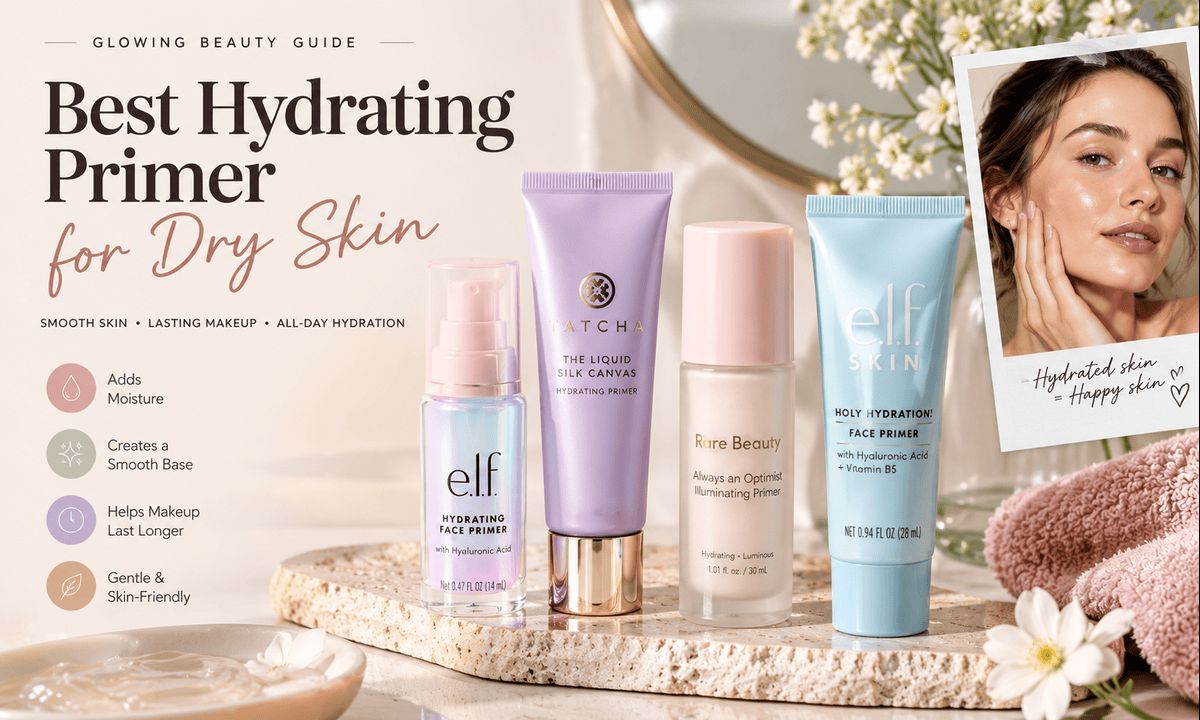
The best hydrating primer for dry skin is a lightweight gel or cream with humectants such as hyaluronic acid or glycerin, applied after moisturiser and left a minute or two to settle. A gel-cream like Illamasqua Hydra Veil suits most people, a silicone-free option like Milk Makeup Hydro Grip suits anyone who dislikes a slick feel, and e.l.f. or XX Revolution cover tighter budgets. A primer helps makeup sit better on dry skin, but it never replaces moisturiser.
Why foundation goes patchy on dry skin
If your foundation clings to dry patches, creases around the nose and looks tired by lunchtime, the base is rarely the problem. Dry skin has a rougher surface, and makeup grabs onto every flake and fine line. Skin that is short of water, which is not quite the same as skin that is short of oil, drinks the moisture out of foundation and leaves it looking flat.
A good hydrating primer sits between your skincare and your makeup. It fills in the surface, adds a little slip so foundation glides, and gives your base something comfortable to hold on to. It will not fix a dry skin routine, but it can make the same foundation look noticeably smoother.
Do you really need a primer if you have dry skin?
No, and it is worth saying so plainly. Adore Beauty makes the point that no makeup product is compulsory, and a good moisturiser can do the job if all you want is a hydrated base. A primer earns its place when you want makeup to last through a long day, when your skin feels tight under foundation, or when your usual base looks dry by the afternoon.
The one thing to avoid is treating primer as a moisturiser. Retailers and makeup artists agree that hydrating primers are an extra step for dry skin, not a substitute. They tend to sit on the surface rather than sink in, so your actual moisture has to come from your skincare.
What to look for on the label
Primer labels are full of promises, so it helps to know which words matter.
Humectants. Hyaluronic acid (often listed as sodium hyaluronate), glycerin and aloe draw water into the skin surface. Makeup brands and beauty editors regularly point dry-skinned readers towards hyaluronic acid primers for exactly this reason.
Emollients. Plant butters, squalane and similar ingredients soften and seal. They are useful if your skin is dry throughout the day rather than just tight after cleansing.
Texture. Gel primers are light and water-based. Cream and balm primers are richer. Serum-style primers sit in the middle. If you are somewhere between normal and dry, start with a gel. If your skin feels dry by mid-morning, go richer.
Silicones. Many primers use silicones for slip and grip. They work well for plenty of people, but Superdrug notes that some people react to them, and silicone-free formulas exist. A common rule of thumb is to pair silicone primers with silicone-based foundations and water-based primers with water-based foundations, because mixing the two can make a base pill.
Fragrance and alcohol. If your skin is dry or sensitive, check that fragrance and drying alcohols are not high on the ingredient list.
SPF. Some primers include sun protection. Treat it as a bonus and still wear a dedicated sunscreen, because you are unlikely to apply enough primer to reach the number on the bottle.
How to apply hydrating primer on dry skin
The order matters more than the product. L’Oréal Paris, Adore Beauty and several beauty editors all give the same advice: moisturiser first, primer second, makeup third. Putting primer under your moisturiser creates a barrier that stops the moisturiser from doing its job.
- Cleanse and moisturise. Use your usual moisturiser and let it absorb fully. Applying primer over damp moisturiser is the quickest route to pilling.
- Use a small amount. A pea-sized amount is enough for the whole face.
- Smooth, do not rub. Makeup artist Sophie Tilley advises smoothing primer on rather than massaging it in the way you would moisturiser. Fingertips work well and warm the product slightly.
- Wait a minute or two. Let it settle before foundation goes on.
- Build foundation in thin layers. A damp sponge or a dense brush blends cream and liquid formulas without lifting the primer.
If you are trying to keep your base quick and simple, our simple everyday makeup routine shows where a primer fits in a five-minute face.
8 hydrating primers for dry skin worth considering
A note on how this list was put together: these picks come from published reviews, ingredient lists and retailer descriptions, not from our own hands-on testing. Formulas and availability change, so check the current ingredient list and price before buying, and patch test anything new if your skin is sensitive.
1. Illamasqua Hydra Veil Primer: best gel formula
Expert Reviews describes this as a water-based gel built around glycerin, sodium hyaluronate and niacinamide. It suits dry skin that feels tight after cleansing but does not want anything heavy. Keep in mind: a gel will not be rich enough on its own if your skin is very dry, so pair it with a proper moisturiser underneath.
2. Milk Makeup Hydro Grip Primer: best silicone-free option
StyleCraze lists it as a silicone-free formula, and Expert Reviews rates it for long-lasting makeup. It is a good fit if you dislike the slippery feel of silicone primers or have found them to irritate. Keep in mind: the grip is the selling point, so it can feel slightly tacky for a minute before foundation goes on.
3. e.l.f. Hydrating Face Primer: best budget lightweight option
StyleCraze highlights its light texture, and it is one of the cheapest hydrating primers from a mainstream brand. A reasonable first primer if you are not sure you will use one regularly. Keep in mind: very dry or flaky skin may want a richer product.
4. Embryolisse Lait-Crème Concentré: best multitasker
Expert Reviews calls it the best affordable multitasking option. It is a rich cream that many people use as both a moisturiser and a makeup base, which makes it handy for dry skin that drinks up product. Keep in mind: it is a cream, not a classic grippy primer, so it works best under lighter, skin-like foundations.
5. XX Revolution Hydra FiXX: best low-cost UK pick
Expert Reviews names it the best budget hydrating primer. A sensible option if you want something affordable from a high-street brand. Keep in mind: check availability and the current formula, as budget lines are updated often.
6. Giorgio Armani Luminous Silk Hydrating Primer: best for a glowy finish
Adore Beauty recommends it for dry to very dry skin and says it hydrates for 48 hours while leaving a radiant finish. That is a brand claim, so treat it as a guide rather than a guarantee. Keep in mind: it sits at the luxury end of the price range and the finish is luminous rather than matte.
7. Transformulas Flawless PhotoGlow SPF30+: best with sun protection
Expert Reviews lists it as a water-based gel with aloe water, cherry blossom and hyaluronic acid, plus SPF30. It is useful if you want one fewer step on busy mornings. Keep in mind: as above, still wear a dedicated sunscreen if you will be outside for long.
8. NYX Plump Right Back Primer Serum: best drugstore plumping option
Beauty Tidbits recommends it for dry to very dry skin, pointing to murumuru, cupuaçu and tucuma butters and a mix of fatty acids. It has a serum feel with a bit more cushion than a gel. Keep in mind: richer butters can feel heavy on combination skin.
If you want another option to research, First Aid Beauty Coconut Skin Smoothie Priming Moisturizer is described by StyleCraze as a dermatologist-tested formula and sits somewhere between a moisturiser and a primer.
Which type suits your kind of dry skin?
- Slightly dry or tight after cleansing: a lightweight gel primer.
- Dry all day or flaky: a cream or balm primer over a rich moisturiser.
- Sensitive: fragrance-free and, if you suspect a reaction, silicone-free.
- Mature and dry: a plumping, serum-style primer, applied in thin layers so it does not settle in lines.
- Dry but wearing sunscreen as a separate step: skip SPF in the primer and focus on hydration.
Common mistakes with primer on dry skin
- Using it instead of moisturiser. It will not give your skin the water or oil it needs.
- Layering over damp moisturiser. Wait until it has absorbed, or the product rolls into little pills.
- Using too much. A thicker layer does not hydrate more. It makes foundation slide.
- Skipping gentle exfoliation. Flakes sit under makeup however good the primer is. A mild exfoliant once or twice a week, if your skin tolerates it, helps. Stop if it stings.
- Mixing the wrong bases. If a combination pills, change one product rather than adding another layer.
When to talk to a professional
If dry skin comes with cracked or bleeding patches, itching that does not settle, or conditions such as eczema or rosacea, makeup is not the answer. The Healthy’s dermatologist guide on moisturiser makes the same point: persistent problems that over-the-counter products do not fix are worth a dermatologist appointment.
Best hydrating primer for dry skin FAQs
Which primer is best for dry skin?
A lightweight gel or cream primer with hyaluronic acid or glycerin suits most dry skin. Illamasqua Hydra Veil, Milk Makeup Hydro Grip, e.l.f. Hydrating Face Primer and Embryolisse Lait-Crème Concentré are commonly recommended in published reviews. The right one depends on how dry your skin is and whether you want silicones.
Do you need primer if you have dry skin?
No. A good moisturiser can give you a hydrated base. A primer helps if foundation looks patchy, you want longer wear or your skin feels tight under makeup.
Do you apply primer before or after moisturiser?
After. Moisturiser goes on first and needs time to absorb, then primer, then foundation. Primer applied first blocks your moisturiser from working.
Can I use moisturiser instead of primer?
Yes, if you only want hydration. A moisturiser will not smooth or grip like a primer, but a rich cream can make a perfectly good base for light foundations.
Is silicone primer bad for dry skin?
Not necessarily. Silicones give slip and smoothness and suit many people. Some people find them irritating or heavy, so silicone-free primers are worth trying if you notice breakouts or discomfort.
How do I stop foundation clinging to dry patches?
Gently exfoliate, moisturise well, let it absorb, apply a thin layer of hydrating primer and build foundation lightly with a damp sponge. Avoid heavy powder on dry areas.