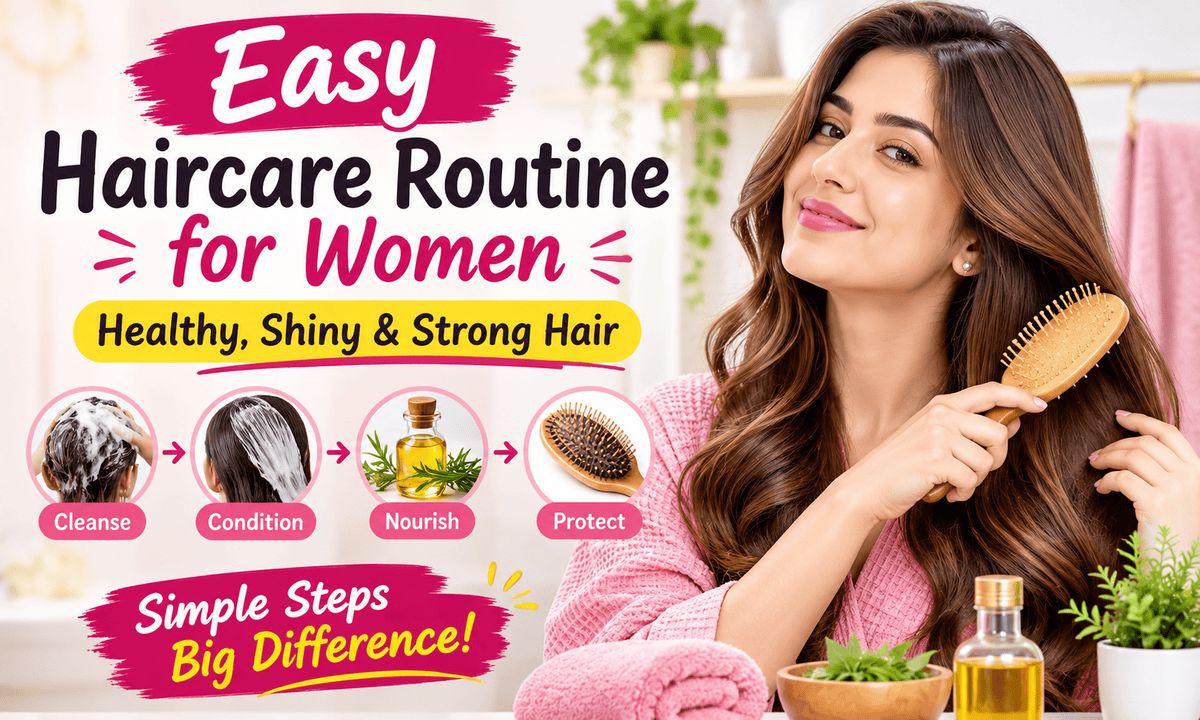
Quick answer
An easy haircare routine for women has four steps: wash the scalp, condition the lengths, protect before heat, and style with one product. Most people only need to shampoo two or three times a week, with a leave-in conditioner or a weekly mask covering the rest. Set your wash schedule by how oily your scalp gets and how dry your lengths feel, not by a fixed rule, and keep the same products for two to three weeks before changing anything.
What an easy haircare routine really needs
Hair advice online tends to run to ten steps and a shelf of bottles. A realistic routine is much shorter. Evo’s guide breaks haircare into five jobs: cleanse, condition, treat, protect and style. For most people, only some of those need to happen every time.
The minimum that works for almost everyone is a shampoo that suits your scalp, a conditioner for your lengths, a heat protectant if you use hot tools, and one styling product. Everything else, such as masks, oils and scalp treatments, is optional and should be added only if your hair shows you a clear reason.
How often should you wash your hair?
There is no universal number, and several hair brands say the same thing. Garnier’s advice is to wash only as needed, noting that oily hair needs washing more often while dry hair can often go several days between shampoos. Dyson makes a similar point that frequency depends on your hair texture and type.
As a starting point, adjust from here and watch how your scalp feels by day two:
- Oily scalp or fine, straight hair: every one to two days.
- Normal or wavy hair: every two to three days.
- Dry, thick or curly hair: once or twice a week.
- Coily or very dry hair: about once a week, sometimes less, with conditioner or water rinses in between.
If your scalp is itchy, greasy at the roots or heavy by the second day, wash sooner. If your lengths feel straw-like, wash less and condition more.
The four-step wash day (about 20 minutes)
Wash day does most of the work, so it is worth doing properly once or twice a week.
- Detangle first. Work through dry hair with a wide-tooth comb or a brush, from the ends up, before it gets wet. Wet hair is more fragile and snaps more easily.
- Shampoo the scalp only. Massage with your fingertips, not your nails, and let the lather rinse down the lengths. Shampoo is there to clean the scalp, not to scrub your ends.
- Condition the mid-lengths and ends. Keep conditioner off the roots unless your scalp is very dry. Leave it on for two to three minutes while you do something else in the shower.
- Rinse and blot. Rinse with lukewarm water, since very hot water can leave the scalp dry and irritated. Squeeze out the water and blot with a microfibre towel or an old T-shirt rather than rubbing.
If you use a leave-in conditioner, apply it to damp ends right after towelling. If you use heat, add a heat protectant before the dryer or iron.
The five-minute daily routine between washes
On the days you do not wash, the routine should take almost no time.
- Morning: detangle gently, add a little dry shampoo at the roots if they look flat, and smooth the ends with a drop of serum or oil.
- During the day: keep ties loose. Tight ponytails on the same spot cause breakage over time.
- Night: a loose braid, a silk or satin scrunchie or a silk pillowcase cuts down friction while you sleep.
Dry shampoo helps you stretch a wash, but it does not clean the scalp. If you use it for more than two days in a row, wash before it builds up.
A simple weekly haircare plan
Here is one week that works for most people with normal to oily hair. Swap the days to suit you.
- Monday: wash day, with shampoo, conditioner and leave-in.
- Tuesday: rest. A quick detangle and nothing else.
- Wednesday: refresh with dry shampoo or a damp brush-through.
- Thursday: wash day.
- Friday: rest or refresh.
- Saturday: mask or treatment day. Leave a hair mask on the lengths for 10 to 15 minutes while you do something else.
- Sunday: rest.
If you have dry, curly or coily hair, cut it to one or two washes with a mask on one of them, and use the other days to refresh with water and a little leave-in.
Easy haircare routines by hair type
Fine or flat hair. Use a light shampoo and keep conditioner to the ends. Skip heavy oils and butters, which weigh hair down. A volumising mousse or root spray is the only styler you need. Wash a little more often, since fine hair gets greasy sooner.
Thick or dry hair. Wash less and condition more. A weekly mask and a leave-in cream keep the lengths soft. Use a wide-tooth comb on damp hair with conditioner in it, and add a few drops of oil to the ends on dry days.
Wavy or frizzy hair. Frizz usually means hair is short of moisture or roughed up by friction. Use a conditioner every wash, a light leave-in, and scrunch rather than rub dry. Let it air dry or diffuse on low heat so the wave pattern forms without being disturbed.
Curly or coily hair. Cleanse less often, condition generously and detangle only when the hair is wet and slippery with conditioner. A leave-in plus a curl cream or gel is the whole styling routine. Protective styles and a satin bonnet at night cut friction and save time.
Colour-treated or damaged hair. Choose a gentle shampoo, condition every time, and add a weekly mask or bond-repair treatment. Wash with lukewarm water and use heat protectant whenever a hot tool is involved. Red and copper shades tend to fade faster than most, and our copper hair color guide goes through how to keep them looking fresh between salon visits.
The few products you actually need
Not Your Mother’s minimalist routine guide suggests sticking to a shampoo, a conditioner, one treatment and one styler, which is a sensible limit. Here is the full list, in order of importance:
- Shampoo that suits your scalp, whether that is oily, normal or dry.
- Conditioner suited to the dryness of your lengths.
- Leave-in conditioner or light oil, for ends that dry out between washes.
- Heat protectant, only if you use hot tools.
- One styler, such as mousse, cream or gel, depending on your texture.
- A weekly mask, optional but useful for dry or coloured hair.
- A wide-tooth comb and a microfibre towel, which cost little and reduce breakage.
Keep the same set for two to three weeks before changing anything. It takes that long to tell whether a product is working, and changing several things at once makes it impossible to know which one made the difference.
Habits that matter more than products
- Turn the heat down. Use hot tools on the lowest setting that works and only on dry hair.
- Trim regularly. A small trim every eight to twelve weeks stops split ends from travelling up the hair.
- Be gentle when hair is wet. Detangle from the ends upward and never rub.
- Protect from sun, chlorine and salt water. Rinse hair after swimming and wear a hat on bright days.
- Look after the scalp. Healthy hair grows from a clean, comfortable scalp. Rinse shampoo and conditioner thoroughly.
Common mistakes to avoid
- Washing on a fixed schedule instead of when your hair actually needs it.
- Putting conditioner on the roots if your scalp is oily.
- Using too many products, which build up and make hair look dull.
- Switching products every few days, which stops you seeing what works.
- Using dry shampoo as a substitute for washing, rather than as a stopgap.
- Skipping trims because the hair feels fine, then wondering why it will not grow.
When to see a professional
A routine will not fix everything. If your scalp is persistently itchy, flaky or sore, if you notice patches of hair loss or sudden thinning, or if a product causes a rash, see a GP, a dermatologist or a trichologist. These are health issues, not styling problems.
Easy haircare routine for women FAQs
How often should I wash my hair?
As often as your scalp needs it. Oily scalps usually need washing every one to two days, normal hair every two to three, and dry, curly or coily hair once a week or so. Garnier’s advice is simply to wash only as needed.
What is the right order for shampoo and conditioner?
Shampoo first, on the scalp, then rinse. Then conditioner on the mid-lengths and ends, left on for two to three minutes, then rinse. Leave-in products go on after towelling, on damp hair.
Do I need a leave-in conditioner?
Not always. It helps most if your ends are dry, frizzy or tangled, or if you have curly or coily hair. If your hair feels fine with just conditioner, skip it.
How can I stop frizz?
Add moisture and cut friction. Condition at every wash, use a light leave-in, blot rather than rub, avoid brushing dry curls, and sleep on silk or satin. Frizz that appears suddenly after heat styling may mean you need a heat protectant.
What is the simplest routine for busy mornings?
Wash at night or on weekends, detangle in the morning, add a little dry shampoo or serum, and tie it loosely if you need to. Five minutes is enough when wash day does the main work.
How do I look after coloured hair?
Use a gentle shampoo, wash with lukewarm water, condition every time and add a weekly mask. Protect from heat and sun, and ask your colourist which aftercare products suit your shade.