Quick Answer
The most stylish puffer jackets for women balance warmth, shape and colour. Pick a fill that suits your climate (down for dry cold, synthetic for damp weather), a length that works with your usual outfits, and a cut that has some structure at the waist or shoulders. Cropped puffers suit high-waisted trousers, mid-length styles suit everyday commuting, and long puffers are best for very cold days. Neutral shades are the easiest to wear, while a bold colour or glossy finish turns the jacket into the statement piece.
The puffer jacket used to be the coat you wore when style no longer mattered. Those days are over. Today the puffer is one of the most worn pieces of outerwear in any winter wardrobe, and the choice is huge: cropped, belted, glossy, quilted, oversized, longline. That is great news, but it also makes buying one harder than it looks.
This guide explains what makes stylish puffer jackets for women work, from fill and fabric to fit and colour, then shows you how to wear yours so it never looks like an afterthought.
Why the Puffer Jacket Became a Style Staple
A puffer is built around a simple idea. Insulation sits inside stitched channels (called baffles), which trap warm air close to the body. That is why a light puffer can feel warmer than a heavy wool coat.
What changed is the design. Brands began playing with proportion, shine and cut. Cropped shapes made puffers work with high-rise jeans. Belted versions brought back a waistline. Matte and glossy finishes made them suitable for everything from city streets to weekend walks. The result is a coat that handles real British weather while still looking considered.
What to Look For Before You Buy
Fill: Down or Synthetic?
The filling decides how warm your jacket is, how it feels and how it handles rain.
- Down is the soft under-plumage of ducks and geese. It is light, packs down small and gives excellent warmth for its weight. Its weakness is moisture: wet down clumps and loses much of its heat.
- Synthetic fill (polyester-based insulation) is a little heavier for the same warmth, but it keeps insulating when damp and dries faster. It also tends to cost less and is animal-free.
If you live somewhere wet and mild, synthetic is often the smarter everyday choice. For dry, freezing days or travel, down is hard to beat.
If you choose down, check how it was sourced. Look for certification such as the Responsible Down Standard, which covers animal welfare across the supply chain from farm to finished product.
Fill Power and Fill Weight
Fill power measures how much space an ounce of down takes up. Higher numbers (650 and above) mean loftier, warmer down for less weight. Fill weight tells you how much insulation is in the jacket. A high fill power with a low fill weight gives a light, fairly warm coat. A mid fill power with a heavy fill weight gives a bulky but very warm one. Read both numbers together.
Outer Fabric and Finish
The shell affects both looks and performance.
- Matte nylon looks clean and sporty and hides wear well.
- Glossy or wet-look fabric reads more fashion-led and catches the light, which is great for evening or for adding interest to plain outfits.
- Water-resistant coatings (often labelled DWR) help rain bead and roll off. They will not make a jacket fully waterproof, but they protect the fill during short showers.
- Recycled shells are now common and perform just as well as virgin nylon.
Baffle Size and Stitching
Wide baffles create the big, pillowy look that feels fashion-forward. Narrow, close stitching gives a slimmer, more tailored outline. Box-wall construction (where fabric walls separate the channels) holds warmth better than sewn-through seams, which can create cold spots along the stitch lines.
Choosing the Right Length for Your Lifestyle
Length changes how a puffer looks and how useful it is day to day.
Cropped Puffers
Cropped puffers finish at or just above the waist. They pair beautifully with high-waisted jeans, wide-leg trousers and midi skirts because they show off your waistline. They are the most fashion-led choice but leave your lower back and hips more exposed.
Hip-Length Puffers
Hip-length puffers are the all-rounder. They cover the lower back, sit well over jeans and leggings, and work with both trainers and boots. If you only want one puffer, this is the length to choose.
Mid-Thigh Puffers
Mid-thigh puffers add warmth without swallowing your frame. They are ideal for commuting and school runs.
Longline Puffers
Longline puffers reach the knee or below. They are the warmest option and look elegant with slim trousers and knee-high boots. Choose one with side slits or a two-way zip so you can walk and sit comfortably.
Finding a Flattering Fit
A common worry is that puffers make you look bigger than you are. The fix is structure.
- Look for shape at the waist. A belt, a drawstring or slightly curved side seams create definition.
- Check the shoulder line. The seam should sit at or just beyond your natural shoulder. Dropped shoulders work on oversized styles, but on fitted jackets they can look sloppy.
- Mind the sleeves. Sleeves should reach your wrist bone when your arms are bent. Too short and you lose warmth; too long and the jacket looks borrowed.
- Size for layers. Try it on over a chunky jumper. You should be able to zip it fully and lift your arms without the hem riding up past your waist.
- Balance volume. If the jacket is oversized, keep the lower half slim. If you prefer wide trousers, choose a cropped or fitted puffer.
Colours and Finishes That Always Look Good
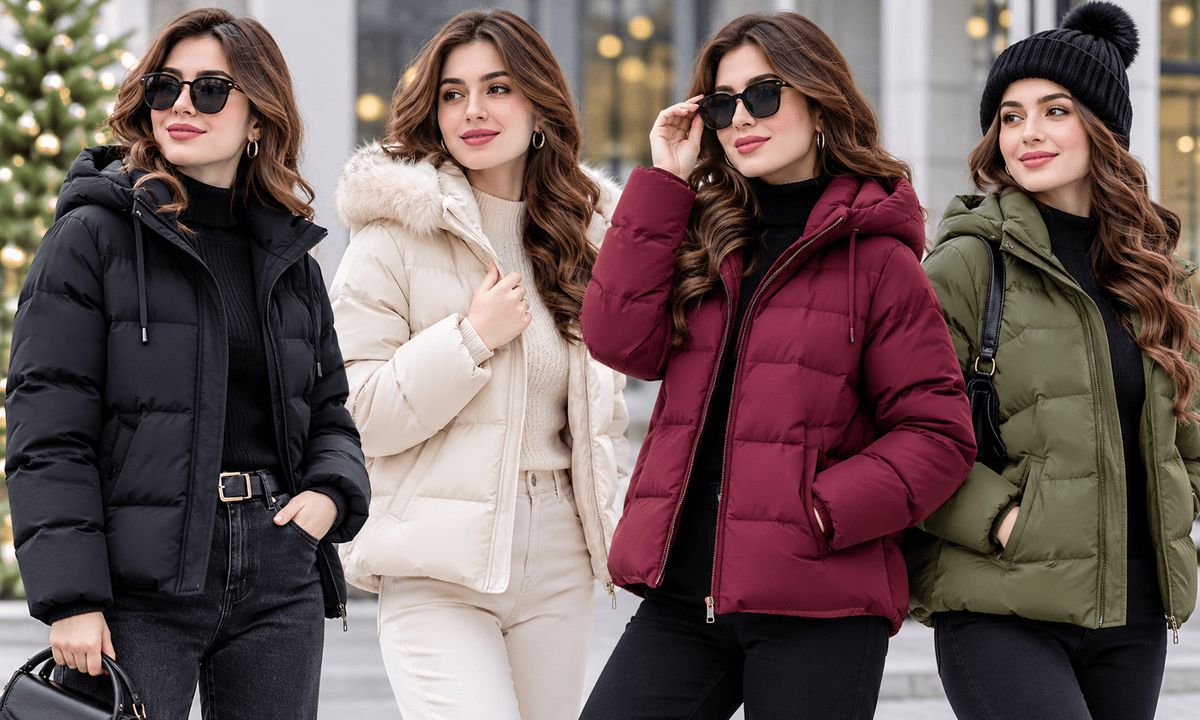
Neutral puffers in black, cream, camel, stone, olive or navy are the easiest to wear. They go with everything and look more expensive than they cost. Cream and ivory have become especially popular because they look fresh against winter’s darker palette, though they need more care.
If you already own a neutral coat, a coloured puffer can be the most fun piece in your wardrobe. Chocolate brown, burgundy, forest green and soft butter yellow are all easy to style. Metallic and glossy finishes in silver or deep black work well for evenings and festive plans.
A quick tip: match one element of your jacket to your accessories. A camel puffer with a camel scarf, or a black glossy puffer with black leather boots, ties the outfit together straight away.
Stylish Puffer Jackets for Women: Six Styles Worth Knowing
- The cropped cocoon. Rounded, boxy and short. Wear it with high-rise straight jeans and loafers or chunky trainers.
- The belted puffer. Mid-length with a self-tie belt. It gives the warmth of a puffer with the shape of a wrap coat.
- The longline quilted coat. Knee-length with slim channels. Smart enough for the office over trousers and a fine knit.
- The glossy statement puffer. High-shine fabric and generous baffles. Keep the rest of the outfit simple.
- The puffer gilet. Sleeveless, great for layering over hoodies and knitwear on milder days.
- The hooded parka-puffer hybrid. Longer length, deep hood, often with a water-resistant shell. The practical pick for wet climates.
How to Style a Puffer Jacket
Everyday Casual
Pair a hip-length puffer with straight jeans, a striped long-sleeve top and clean white trainers. Add a beanie and small crossbody bag. Simple, warm and polished.
Smart Casual for Work
A longline puffer in black or camel over tailored trousers, a roll-neck and loafers looks surprisingly sharp. Swap the trainers for ankle boots and carry a structured tote.
Weekend Layering
Try a puffer gilet over an oversized hoodie, leggings and walking boots. For colder days, layer a cropped puffer over a long cardigan for a mix of lengths that looks deliberate.
Dressed Up for Evening
A glossy cropped puffer over a slip skirt and fine knit, finished with heeled boots, makes a great winter evening outfit. The contrast between sporty and soft fabrics is what makes it work.
If you enjoy mixing textures, a puffer also sits nicely alongside softer pieces. Our guide to faux fur jackets shows how to choose and style the other big outerwear trend of the season.
Caring for Your Puffer So It Lasts
A well-cared-for puffer can last many winters.
- Wash sparingly. Spot clean marks with a damp cloth and mild soap. Full washes are only needed once or twice a season.
- Use the right detergent. Down needs a specialist down wash. Regular detergent strips natural oils from the feathers.
- Dry with care. Tumble dry on low with two or three clean tennis balls to break up clumps and restore loft. It can take a few cycles.
- Store it loose. Never keep a puffer compressed for months. Hang it or fold it loosely in a breathable bag.
- Refresh the water resistance. Spray-on treatments bring back the beading effect when the shell starts absorbing water.
Common Mistakes to Avoid
- Buying too small and being unable to layer underneath.
- Choosing a long, heavy down coat for a mild, rainy climate.
- Ignoring the hood. A detachable hood adds flexibility; a fixed hood that does not fit over your head is useless.
- Pairing a voluminous puffer with equally voluminous bottoms, which hides your shape completely.
- Forgetting pockets. Fleece-lined hand pockets and an inner zip pocket make a huge difference day to day.
Final Thoughts
The best puffer is the one you reach for every morning without thinking. Start with your climate and daily routine, choose the fill and length that suit them, then let colour, finish and fit bring the style. Get those basics right and your puffer will keep you warm and look good for years.
FAQs
What is the most stylish puffer jacket length for women?
Hip-length is the most versatile because it works with jeans, trousers, skirts, and dresses. Cropped styles are the most fashion-forward, while longline coats look elegant and give the most warmth.
Are down or synthetic puffer jackets better?
Down is lighter and warmer for its weight, making it ideal for dry, cold conditions. Synthetic fill keeps you warm when damp and dries faster, so it suits wet climates and everyday use.
How do I stop a puffer jacket from making me look bulky?
Choose a style with waist definition, such as a belt or drawstring, keep your lower half slim when the jacket is oversized, and pick narrower baffles for a sleeker outline.
What colour puffer jacket goes with everything?
Black, navy, camel, olive and cream are the most versatile shades. They pair with nearly any outfit and accessory colour.
Can you wear a puffer jacket for formal occasions?
Yes, if you choose a longline or belted style in a neutral or glossy finish and wear it over tailored pieces such as trousers, a midi dress or a fine knit.
How often should I wash a puffer jacket?
Once or twice per season is enough. Spot-clean small marks in between, and always use a down-specific detergent for down-filled jackets.